Legislation to address the harm from sports betting advertisements in Canada took a significant step forward in late October.
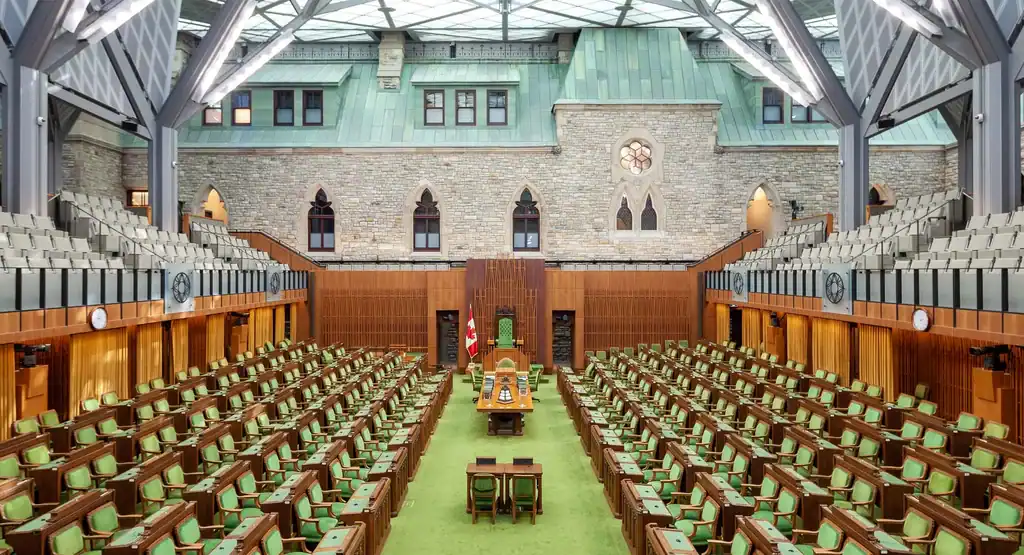
Bill S-211, an act to create a national framework on sports betting advertisements, passed a pivotal third reading in the Canadian Senate. It moved to the House of Commons for consideration.
“I was thrilled to see my legislation Bill S-211 — an act respecting a national framework on sports betting advertising — passed at third reading in the Senate,” Sen. Marty Deacon of Ontario said. “That this bill was dealt with promptly and with such support reflects the importance and timeliness of our efforts.”
In a Senate speech, Deacon said ubiquitous sports betting ads are “a problem that is not going to get better on its own.” She added: “We’re steering straight toward the iceberg if we do nothing.”
Deacon’s bill is a reintroduction of last session’s Bill S-269.
Betting Ads Appear Across Canada
In 2021, the Canadian Parliament lifted a ban on sports betting, allowing provinces to authorize it within their own jurisdictions.
However, the government did not install national guardrails around advertising. Online gambling is an addictive product, much like tobacco. Gambling addiction is among the most dangerous addictions due to its high suicide rates and wide range of harm.
Studies show that, on average, 8 to 10 people around a problem gambler also experience harm.
“The ads we see permeate every phone and every television screen across the country,” Deacon said. “They are all from Ontario, the only province where private companies are allowed to operate. To date, every other province or territory only allows for single (game) sports betting through their own lottery corporations. And yet, I’ve heard from Canadians from coast to coast to coast that they have grown tired and concerned about these Ontario-based ads.”
According to Deacon, the lay of the land in Canada is a “Wild West.”
She is interested in stronger protections, but S-211 represents a practical approach to addressing sports gambling addiction right now. Progress for Deacon’s bill came just days after a leading Ontario sportsbook was fined for allegedly preying on a player.
“What this legislation would not do on its own is ban gambling ads outright,” Deacon said. “While this is what I would love to see, I do appreciate that there are Charter implications in that, and I believe that if I sought a complete ban, this legislation would certainly have had a rougher ride. As the saying goes, don’t let the perfect be the enemy of the good.”
What Would S-211 Do?
The bill would require the Minister of Canadian Heritage to develop a national framework on sports betting advertising.
The framework may restrict ad volume, placement, and the use of celebrity/athlete endorsements. It would also set national standards for addiction prevention and support.
The Canadian Radio-television and Telecommunications Commission (CRTC) would be required to review its own broadcasting policies for effectiveness in reducing harm from pervasive gambling advertisements.
The legislation would also promote research and information sharing on prevention/diagnosis for minors, as well as support for affected people.
The Minister must table a framework and implementation strategy within one year of the bill coming into force. A follow-up implementation report would be due within five years.
Ontario’s Existing Celebrity Restriction
Recognizing that youth are particularly vulnerable to gambling, in 2024 the Alcohol and Gaming Commission of Ontario banned online gambling ads that feature athletes and celebrities.
However, within days, commercials with celebrity athletes promoting so-called “responsible gaming” features of sports betting platforms were released to sidestep the ban.
Warnings to gamble responsibly have been shown in a systematic review of 166 studies to be ineffective, according to the Canadian Medical Association Journal.
The publication said there have been “weak efforts of provincial governments who stand to make substantial revenue from [online gambling].”
Ontario’s open single-game sports betting sector produced total tax revenue of more than $1.4 billion during its first three years, according to the journal.
Parallels with U.S. Efforts
Across the border in the U.S., sports gambling advertisements have also run amok.
In the U.S., roughly half of online sports bettors experience harm. Extreme marketing is one reason addiction rates have soared in recent years.
To address the problem, gambling industry opponents introduced the SAFE Bet Act in late 2024. The legislation had not advanced in Congress as of late 2025.
Discover more from GamblingHarm.org
Subscribe to get the latest posts sent to your email.