
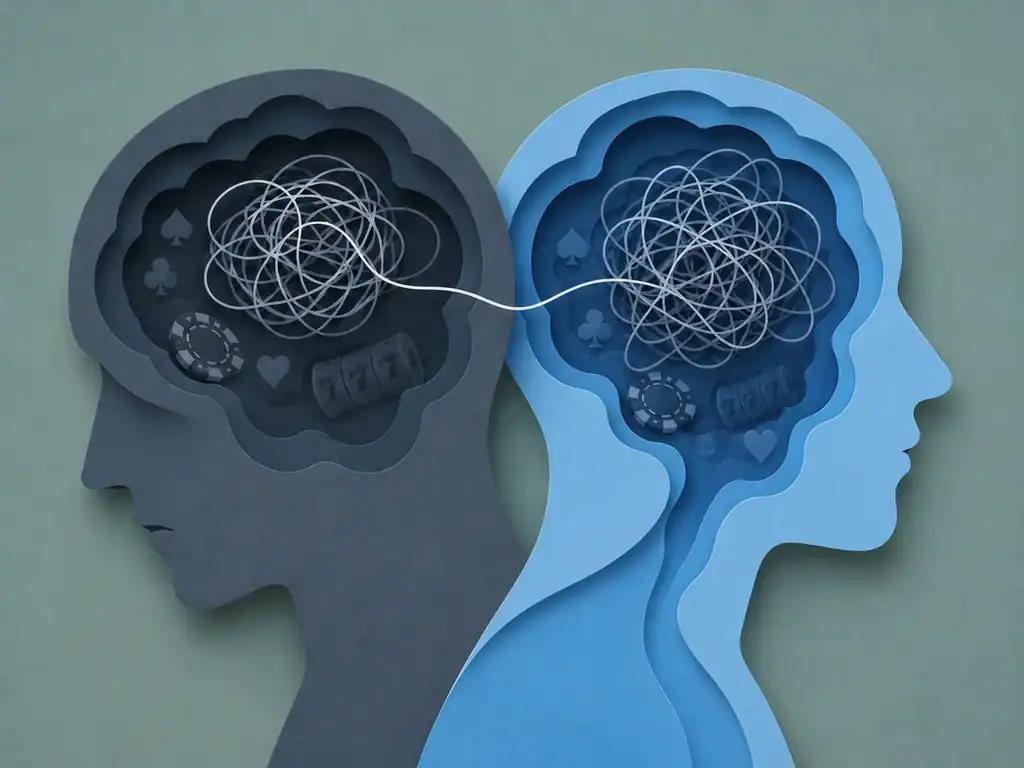
Emotional contagion involving gambling addiction can change the atmosphere of an entire household or family and cause harm. One gambling addiction typically harms five others.
Someone with gambling issues may quickly shift through excitement, irritability, anxiety, secrecy, guilt, and hopelessness. Loved ones might feel these emotions too, growing anxious about which version of the person will appear.
During an April webinar hosted by the Virginia Partnership for Gaming and Health, licensed social worker and gambling counselor Marsha Woods explained how emotional contagion can intensify the gambler’s mood cycle and affect family members and other people in a support network.
“Our emotional state is going to be profoundly influenced by those that we keep around us, by those who we interact with both directly and indirectly,” Woods said.
Understanding this process can help families recognize unhealthy patterns, establish boundaries, and respond in ways that support recovery without becoming consumed by the chaos surrounding another person’s gambling.
What Is Emotional Contagion?
Emotional contagion is the psychological phenomenon in which people absorb and reflect the emotions of those around them, often unconsciously.
Woods described it as “the unconscious tendency to mimic and synchronize facial expressions, vocalizations, postures, and movements with others, leading to the convergence of emotions.”
Nonverbal cues, such as tone, facial expressions, and posture, can shape the emotional state of others. Calmness can help others settle, while anxiety or anger can quickly spread.
Woods cited a personal example: After a stressful morning with a missing delivery and keys locked in a company vehicle, she called her adult son for help. Her anxiety affected him.
“My emotions and the way in which I was communicating with him and the way in which I was verbalizing my words, my tone, my pitch, my volume had a lot of contagion towards his then tone, pitch, volume, and anxiety,” Woods said.
In a household affected by gambling addiction, this process may occur repeatedly and at a much greater intensity.
How Emotional Contagion Relates to Gambling Addiction
Woods entered the gambling treatment field after personally witnessing the effect of gambling addiction on a family.
She was in a long-term relationship where her partner’s gambling problem was hidden until a maxed-out credit card notice arrived at her work.
“I really didn’t feel like, even as a licensed social worker, that [gambling] was an addictive behavior until I lived that life,” Woods said.
The addiction’s effect extended to her children, and the home’s emotional atmosphere would change when her partner arrived.
Woods described waiting with her children, feeling regulated until her partner entered, and noticing that the home’s mood would change with his emotional state.
Over time, a family can begin organizing its emotional life around the person’s gambling. A spouse or child may closely monitor the person’s facial expression, voice, or behavior for signs of trouble. The household may become tense even before anyone says a word.
“It wasn’t until I had some time away from the relationship that I really understood that he was really dictating the mood in our house and that that had to be improved for our children,” Woods said.
What Is the Gambler’s Mood Cycle?
The gambler’s mood cycle refers to a pattern in which a person who gambles compulsively repeatedly moves through strong emotional highs and lows, often as a result of their gambling behavior.
“The gambler’s mood cycle is a compulsive loop of highs, extreme highs and very extreme lows,” Woods said. It’s fueled by dopamine, according to Woods.

The cycle commonly includes several stages:
1. The Winning Phase
A win can produce excitement, optimism, and confidence. The person may begin to feel unusually capable or powerful.
“They feel great and optimistic. They feel like they’re doing the right thing,” Woods said. “Their dopamine levels skyrocket, and their sense of power is almost like being invincible.”
Early wins can create powerful memories that draw a person back to gambling long after heavy losses.
2. The Losing and Chasing Phase
As losses mount, excitement may turn to anxiety and irritability. The person may bet more frequently or for higher stakes to recover losses.
“They often chase those losses, believing that they can win some of the money back,” Woods said. “This stage often leads to higher risks and deeper financial struggles.”
In this stage, family members may notice mood swings or unexplained absences. Other signs include borrowing money, making unusual ATM withdrawals, or becoming intensely preoccupied with money.
All of these red flags can create harmful emotional contagion within a family or tight-knit social group.
3. The Desperation Phase
Repeated gambling losses can lead to emotions such as panic, remorse, depression, guilt, and hopelessness.
“This is the phase in which you need to be overly concerned about the well-being of your client,” Woods said as advice to her colleagues. “The person often feels trapped, alienated from their family because, as we know, gambling addiction is a very secret addiction.”
Secrecy may deepen someone’s isolation. People may hide losses and lie to loved ones. For a person who is usually honest, these actions can feel out of character and weigh on their conscience.
For these reasons, group therapy can be effective for treating a gambling addiction thanks to social support.
4. The Relapse Cycle
Relapse is common with gambling addiction.
A person may quit gambling and then return to it as an attempted escape from guilt, financial pressure, loneliness, boredom, or painful emotions.
“They’ll return to gambling to escape the guilt, the trauma, or the financial problems that they’re currently in,” Woods said. They may also “re-engage with the memory of the early wins.”
Gambling Environments Are Designed to Amplify Emotions
Emotional contagion is also present in gambling environments, where excitement is amplified to encourage continued play.
A person may see someone else win and begin to feel hopeful. Lights, celebratory sounds, near misses, and visual effects can create the impression that winning is common or close at hand.
“Casinos don’t just rely on luck to make money,” Woods said. “They rely on the psychology of the game.”
Casinos limit distractions (e.g., no windows) and make cash readily available to keep people playing.
“From the moment you step onto the gaming floor, everything around you is specifically designed … to keep you playing as long as possible,” Woods said.
That also applies to online casinos and sports betting apps, which are accessible from home, work, or anywhere. Notifications, ads, and easy payment remove barriers that once made stopping easier.
“We are all allowed to gamble on our phones now, right in our pajamas, in our bed,” Woods said.

During the question-and-answer portion of the webinar, Woods expressed a sharply critical view of mobile gambling.
“My personal perspective is that online gambling from your phone should be illegal,” Woods said. “I think it’s extorting the humans that we love and need in the world.”
She added: “I do not care for the phone gambling in your bed in your pajamas. It’s hard to treat. It’s very hard to treat.”
Online gambling in bed can be particularly harmful to a person’s sleep.
How Families Can Break the Emotional Contagion Cycle
A loved one cannot control another person’s gambling, and it can be especially difficult if it’s your father or mother.
But, in some situations, family members can take steps to protect their own emotional well-being and avoid becoming pulled into a harmful cycle.
When one person is highly dysregulated, responding with anger or frantic attempts to solve every problem may worsen the situation.
Remaining calm does not mean accepting harmful behavior or ignoring financial risks. Rather, it can help a person think more clearly while establishing boundaries.
Woods recommended simple grounding practices that can help people experiencing gambling urges and their loved ones regulate their emotions.
Box Breathing
Box breathing involves inhaling for 4 seconds, holding for 4 seconds, exhaling for 4 seconds, and holding again for 4 seconds.
The process can be repeated several times.
“The body will begin to self-regulate,” Woods said.

The 5-4-3-2-1 Grounding Method
The 5-4-3-2-1 grounding exercise directs attention to the five senses:
- Five things you can see
- Four things you can feel
- Three things you can hear
- Two things you can smell
- One thing you can taste
“It calms people down,” Woods said. “It keeps them grounded.”
These techniques will not fix a gambling addiction on their own. They can help reduce emotional contagion and escalation and create a better opportunity to make a safer decision.
Recognizing Gambling Triggers
Woods also encouraged people to identify the internal, financial, environmental, and social triggers that can increase the urge to gamble.
Common triggers may include:
- Anxiety, depression, stress, boredom, or loneliness
- Payday, an unexpected payment, or sudden access to cash
- Financial pressure and the hope of solving money problems by gambling
- Gambling advertisements and app notifications
- Seeing other people gamble or talk about winning
- Cognitive distortions, such as believing a large win is only one bet away.
Replacing time previously spent gambling is also important. A person who stops gambling may suddenly have many empty hours that once revolved around casino trips or gambling apps. New routines, engaging activities, and support can help reduce the risk of relapse.
Recovery Is Possible
Gambling addiction can harm marriages and other close relationships, but Woods ended her talk on emotional contagion with a hopeful message.
People experiencing gambling problems may feel trapped in a deeply ingrained pattern. Families may also feel exhausted after repeated cycles of promises, losses, secrecy, and relapse. Change can take time, and setbacks may occur.
But the brain can develop new patterns.
“We can retrain our brains, create these new pathways in the brain,” Woods said.
That applies to people working to stop gambling and to loved ones learning how to step out of a destructive emotional cycle. Recovery may involve professional treatment, peer support, financial safeguards, self-exclusion tools, app-blocking software, and new routines.
“The environment really matters, and recovery is possible,” Woods said.
She added: “I think we should always be very focused on instilling hope into our clients, into our families, into ourselves that change is possible.”
Images via Pixabay.