A new Pew survey reminds me of what I knew: Few Americans pay for news. They dislike doing so and always have free options.
Last year, only 16% paid for news by subscription, membership, or donation. Tough for writers.
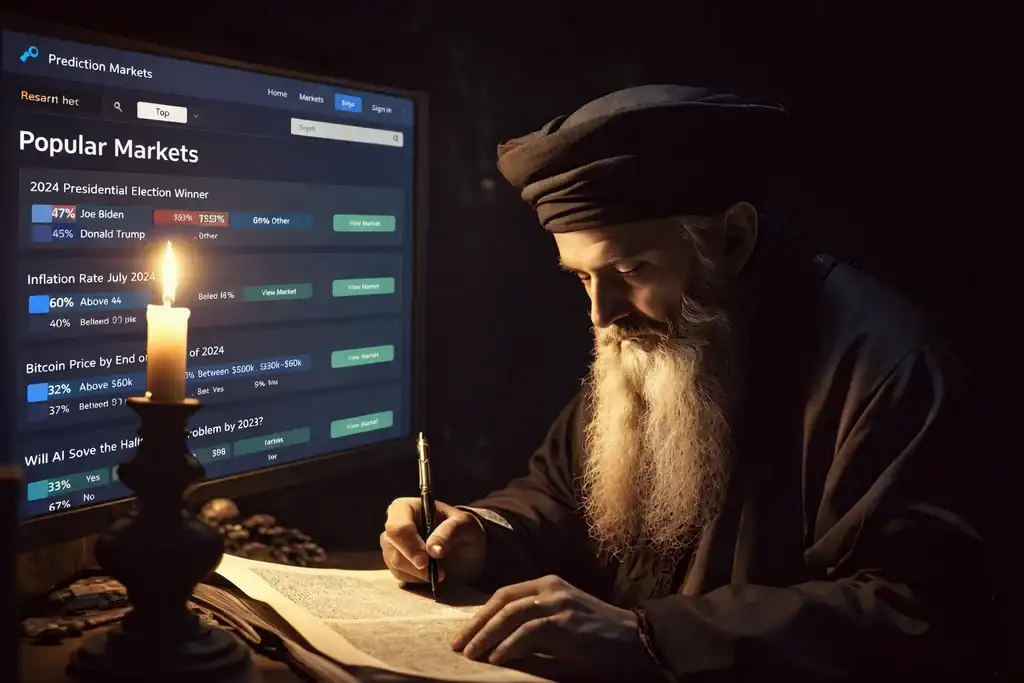
This makes me wonder: Could the rise of U.S.-facing prediction markets—gambling platforms for news events—drive higher news subscription rates, or will they only reinforce consumers’ tendency to find free news? Will they have any impact at all?
Well, first off: Prediction markets are mostly just sports betting, with wagering on what could be considered news events making up a small fraction of their current volume. A presidential election is the exception.
The fledgling sector needs people hooked on betting on news topics like weather, pop culture, and politics. Prediction markets are generating buzz, but are they more than a flash in the pan?
For the sake of argument: Suppose Americans, especially younger generations, do start betting the news with regularity. Would they be more willing to pay for news subscriptions? It depends.
Silver lining: AI has upended online publishing, and social media is full of slop, but the bots aren’t that great at “covering” news in real time. Humans are faster here.
Paywalled live blogs could see higher subscriptions if people become obsessed with gambling on the news, as predicted by these 11-figure prediction markets.
Not so fast: Many people will always bypass paywalls if they can. Crucial reporting will be screenshot and widely shared on Reddit, Discord, and so on. Besides, journalists often post breaking news or scoops on social media.
Right now, it’s hard to see prediction markets reversing these trends.
The darker side: With mass adoption, people could spend heavily on prediction markets—essentially losing money on the news—instead of using that money to pay for news. Addiction harm would be widespread.
Like many sports journalists in recent years, more breaking news journalists could be forced to adapt to news gambling or be out of work. This could mean offering so-called prediction-market “picks” alongside standard news reporting. Many journalists would recoil at such a proposition.
Zooming out: I’m skeptical that a lot of people will find sustained enjoyment betting on the news. After all, prediction markets can’t stop insider trading. No one can even agree on what an insider is (see Kalshi’s recent CNBC interview).
People eventually get sick and tired of losing money. Eventually.
Maybe I’m an old millennial, and younger generations might truly love this. I’ve seen TikToks of Gen Zers trying to pay rent with a prediction market. That probably won’t end well.
Bottom line: Prediction markets seem like a bubble and are unlikely to become household names. Their core product—sports betting—could be stripped away by the Supreme Court.
At best, they may carve out a niche akin to online poker, but broad mainstream acceptance appears far-fetched. Ultimately, prediction markets seem unlikely to help boost subscriptions or sustain journalists’ careers, outside a few exceptions.
Discover more from GamblingHarm.org
Subscribe to get the latest posts sent to your email.