
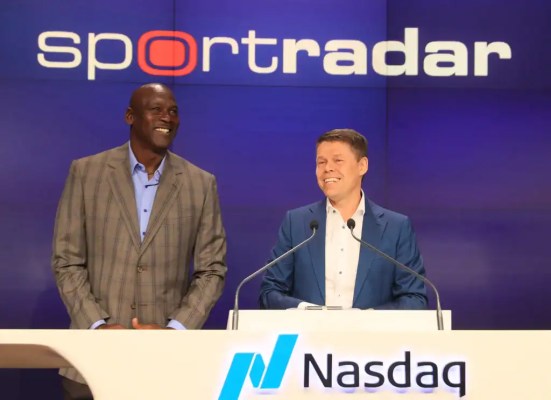
A giant of the U.S.-regulated online gambling sector, which counts Michael Jordan as an advisor and investor, has been hit by explosive allegations that it makes a significant chunk of its revenue from illegal gambling channels.
Sportradar, a Swiss business-to-business supplier of online gambling data and technology in the $27 billion U.S. online gambling market, allegedly turns a blind eye to illegal use of its products and services, according to two research groups. The company also has partnerships with leagues, including the NBA, MLB, and NASCAR.
Muddy Waters Research and Callisto Research, two activist short-seller firms with a financial interest in Sportradar’s stock dropping, claimed in separate reports published on April 22 that Sportradar is heavily involved in offshore, black-market online gambling.
Numerous states in the U.S. license Sportradar for involvement in their respective legal online gambling markets. Online gambling products, legal or otherwise, can be addictive, unsafe, and cause population-level harm.
Allegations Against Sportradar
Researchers said they conducted an undercover investigation, analyzed Sportradar’s website code, and interviewed 15 current and former company employees.
They claimed that their findings are a “compliance nightmare” for Sportradar. The short sellers alleged that Sportradar “has actively aided and abetted illegal gambling across the world’s black and grey markets – not as an accident or an oversight, but as a business strategy.”
They claimed that illegal operators generate 20-40% of Sportradar’s total revenue. The company reported €1,290 million ($1.5 billion) in 2025 total revenue, up 17% from 2024.
In response to the short seller reports, Sportradar said in a statement:
“Sportradar works exclusively with licensed operators, follows strict global compliance and due diligence standards, and we stand by our independently audited financial statements, risk disclosures, and information provided to investors and regulators.”
In a LinkedIn post, the company’s CEO called the allegations “entirely false” and a “personal attack.”
Jordan’s Role With Sportradar
Alongside his investment, Sportradar announced Jordan as a special advisor to the firm’s Board of Directors. The role includes providing counsel on U.S. market expansion, product development, and marketing.
Jordan was an early investor in Sportradar, first taking a stake in 2015.
Alongside his NBA involvement, Jordan is a NASCAR owner. A car owned by Jordan won the 2026 Daytona 500.
It’s worth noting that the car featured logos for the Australia-based Chumba Casino, a so-called “sweepstakes” platform that numerous U.S. states have said constitutes illegal gambling.
Jordan also has a stake in DraftKings, a Sportradar partner, which he acquired in 2020.
The NBA legend was not named in either report on the alleged illegal gambling activity involving Sportradar.
The Market is Troubled
While the short sellers have a conflict of interest and are not consumer protection advocates, the market appears deeply concerned about the report and gives it at least some credibility.
Sportradar’s stock plunged around 30% following the allegations. The share price recovered slightly but was still down more than 20% in the days following the report.

The company’s market capitalization was $3.9 billion at the end of trading on April 24.
Muddy Waters is an Austin, Texas-based short-selling research firm. Callisto Research, a newer short-selling research outfit, does not appear to publicly disclose its physical headquarters.
Sportradar Regulatory Response
According to the short sellers, they shared their findings with multiple North American and European gambling regulators, including the UK Gambling Commission.
They claimed three regulators started an immediate review of the Sportradar findings.
It’s likely we’ll hear more about the allegations in 2026.
Sportradar CEO Carsten Koerl said the company will eventually issue a more robust response.
Analysis and Bigger Picture
The truth could lie somewhere between the short-seller allegations and Sportradar’s claim that it’s squeaky clean.
Generally speaking, online gambling is a global industry, and it figures out how to go where investment is profitable. The neat offshore/illegal versus onshore/legal binary has always been misleading at best. It’s a lobbying claim to expand online gambling and related advertising.
The truth is that the online gambling supply chain is vast and does business globally.
It can be a business decision for companies across industries, including online gambling, to violate or push the boundaries of laws and regulations, potentially incurring a fine. If they don’t, a competitor will.
It’s rare for an online gambling operator or supplier to lose its license, which speaks to the general toothlessness of regulation in many legal online gambling jurisdictions.
The bottom line is that governments should be wary of legalizing online gambling. Doing so worsens the harm, and the companies causing it usually promote “responsible gambling” to shift the blame, and accompanying stigma, onto users. These are often predatory businesses, regardless of whether they operate in legal or illegal markets. Nevertheless, doing business in unregulated markets can quickly taint their corporate responsibility claims.
It’s worth noting that some U.S. policymakers are urging the federal government to crack down on offshore online gambling. The overlap between the onshore and offshore gambling business speaks to the muddied and politically charged nature of enforcement. Meanwhile, public health suffers.
Image credit: Sportradar