Legal experts have attributed the rise of a controversial form of sports gambling to Donald Trump’s second term as president. Could a new form of online casino gambling be on the horizon?
So-called “prediction markets” — gambling platforms that facilitate binary peer-to-peer bets on sports, politics, pop culture, and sometimes even war — have thrown a wrench into the state-sanctioned sports gambling model.
Numerous states are fighting back in court, and court proceedings may be trending in their favor, Daniel Wallach, an attorney in the space, said Wednesday during a panel discussion with tribal casino leaders Victor Rocha and Jason Giles, both of the Indian Gaming Association. The legal fight to watch is Massachusetts versus Kalshi, Wallach said.
Still, the chips have not yet fallen for the business model of companies like Kalshi and Polymarket. The president’s son, Donald Trump Jr., is an advisor to both companies. He also announced that his investment firm had taken a stake in Polymarket.
CFTC Under Trump
Under President Trump, the Commodity Futures Trading Commission has essentially enabled (but not officially approved) prediction-style sports gambling nationwide under the guise of “event contracts.”
In the regulatory vacuum, “swaps” is another term to legally (so far) define the product.
The terminology matters little to people who are already addicted to the platforms or will become addicted.
Under Trump, the CFTC has been in turmoil. It has slashed its staff, and four of its five commissioners have resigned, according to The New York Times. Amid the chaos, a contender to lead the agency is Josh Sterling, a lawyer for Kalshi.
Responsible Gambling Be Damned
In July, Sterling said it was acceptable for Kalshi users to “lose their shirts.” Gambling regulators in Massachusetts condemned Kalshi’s apparent responsible gaming philosophy.
The CFTC’s “regulation” of sports gambling, or lack thereof, has fueled Kalshi and Polymarket to valuations of roughly $5 billion and $8-9 billion, respectively. They are only growing more valuable. On Wednesday, the NHL raised eyebrows by announcing a partnership with Kalshi and Polymarket. It was the first major sports league to embrace the companies.
Those “deeply troubling” deals, as the American Gaming Association called them in a statement, came just a day after DraftKings announced that it’s developing a “predictions” product. The speculation is that DraftKings will offer that product in states in which it doesn’t currently offer sports betting. FanDuel, which dominates the online sports betting sector alongside DraftKings, is also expected to enter the space in some way. Smaller online sportsbooks could fall further behind in the duopoly market.
The near future could bring rapid change to the sports betting sector. Americans spent $13.7 billion on state-sanctioned online and retail sportsbooks in 2024. Most of the industry’s revenue comes from mobile gambling.
Online Casino Fears
The rise of “prediction markets” for sports gambling has sparked some concern that online casino products could be launched using the same underlying technology and the CFTC’s blind eye. In other words, “prediction” online casinos.
Alex Kane, CEO and founder of Sporttrade, and Nigel Eccles, a former CEO of FanDuel, have speculated that these products could be on the horizon. Wallach also thinks it’s possible. Dustin Gouker, a consultant and author of The Closing Line newsletter, also told Gambling Harm that a prediction casino product might one day be developed.
It’s unclear what such a product would look like, but think of it as gambling in a yes/no format on blackjack, roulette, or a slot machine. Gambling game developers could figure it out.
Neither Kalshi nor Polymarket has said they would operate an online casino. However, speculation is swirling that it’s not off the table, especially if they survive legal challenges to their sports gambling products. Would the CFTC block such a product?
What if Trump Wants an Online Casino?
Let’s return to Trump.
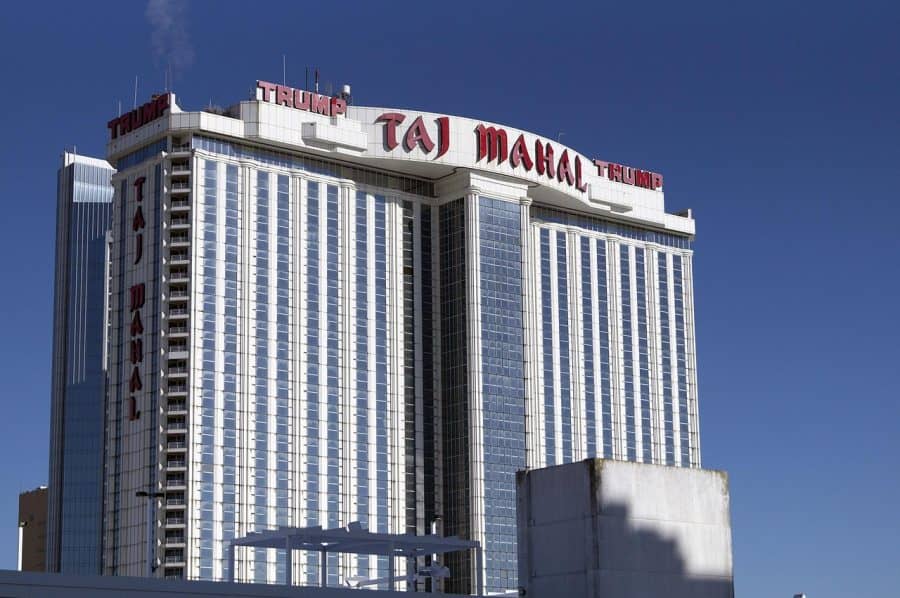
The former Atlantic City casino owner is no longer synonymous with that form of gambling. Nonetheless, the industry helped him become a household name long before serious presidential runs. Could he have a comeback of sorts with an online casino?
It’s a bleak scenario from gambling harm and consumer protection perspectives.
In 2011, Trump flirted with launching an online casino. However, U.S. federal law at the time did not allow online gambling.
A prediction market company could conceivably power a Trump-branded online casino, one that’s under CFTC oversight and available in all 50 states. The Trump family brand could be a skin of an existing gambling platform.
As of late 2025, just seven states have legalized and taxed online casino gambling. Sports betting can be highly addictive, but state policymakers have generally considered online casinos to be significantly more dangerous. It’s left the U.S. open to offshore and so-called “social” or “sweepstakes” online casinos. Critics and some states have called those types of casinos predatory and illegal.
The state-sanctioned online casino market was worth $8.4 billion in 2024, up from $6.5 billion in 2023. It’s still growing rapidly. Online casino is a much more profitable product than sports betting for online gambling firms.
In a future we can easily imagine, a Trump-branded “legal” online casino under CFTC oversight could be too lucrative for the family to pass on. Such a move would be extraordinarily harmful. It would surely upset people in anti-casino states like Utah, Texas, and Georgia, but would any “red” state put up a real fight?
Of course, such a product likely wouldn’t be alone in the market. Existing online casino companies would likely seek a nationwide version of their product if it were legal. That’s also scary.
Discover more from GamblingHarm.org
Subscribe to get the latest posts sent to your email.