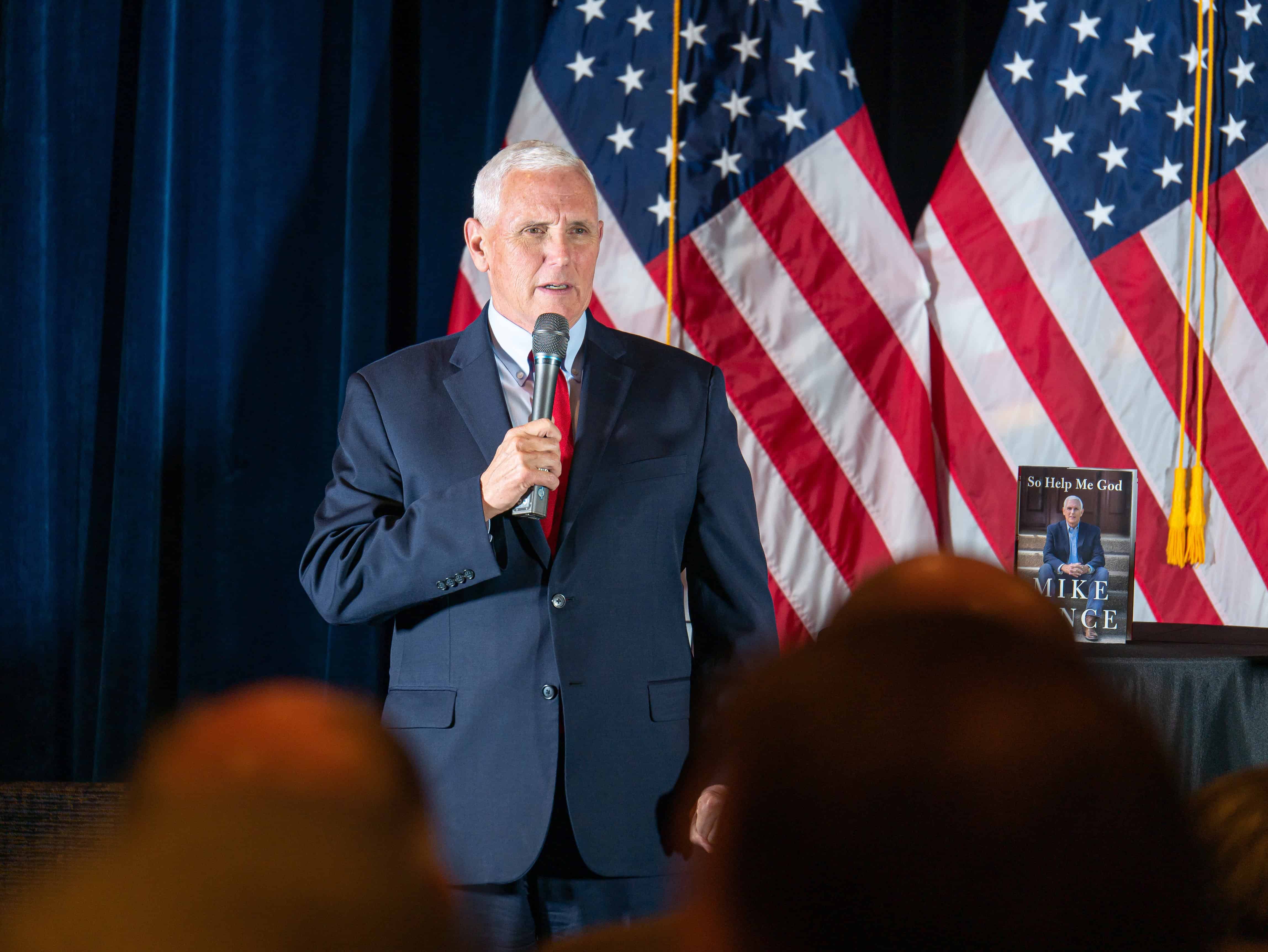
Former Vice President Mike Pence is using his political capital to support a gambling tax change.
Pence’s group, Advancing American Freedom, said August 4 that it opposes congressional efforts to reverse a tax code change that negatively impacts some sports bettors.
The Indianapolis-based AAF wants the U.S. tax code to be unfavorable to sports bettors.
Pence’s Gambling Tax Position
The Republican Party is a mixed bag regarding support and opposition to online sports gambling. Pence is among the camp of Republicans who oppose it.
In July 2025, a controversial legislative package included a tax code change that will hurt gamblers. Sports bettors can no longer write off 100% of their losses.
For example, if a sports bettor broke even for the year, they could only deduct 90% of the money they lost (i.e., money given back to the sportsbooks).
They would still owe taxes even if they didn’t profit from gambling.
“Many Americans could stop gambling due to the tax consequences,” AAF said in a release.
Why Might There Be Fewer Sports Bettors?
The vast majority of sports bettors don’t win enough for the tax code change to impact them.
However, the change could undermine the risky belief that sports betting is a reliable way to make money.
Siena College Research Institute surveyed sports bettors in 2025, finding that 86% of online sports bettors believed they could reliably make money long‑term.
It was an increase from 80% in 2024.
Among bettors aged 18–34, this dangerous confidence rose to 90%.
Countless betting influencers and media misleadingly call sports betting a skill-based activity.
Read more: Does Sports Betting Involve Skill?
U.S. Tax Code Promotes Gambling, Pence Says
According to the Pence-backed AAF, the federal government had for a long time “encouraged” gambling through the tax code.
“Until the One Big Beautiful Bill, America’s tax code actively encouraged gambling by offering full expensing for gambling losses,” AAF continued. “Gambling losses should not be deductible at all.”
The AAF’s policy position appears to be that sports betting should not be criminalized. However, the group opposes the regulation and taxation of the activity.
“Americans have the freedom to gamble on sports, but why should American taxpayers foot the tax bill for sports gambling? Nearly all gamblers lose money, leading to further financial, health, and family problems. Congress should encourage a pro-growth tax code by declining to reinstate full expensing for gambling losses. Legalized sports gambling ultimately makes life more difficult for many Americans while funding the growth of government.”
Indiana, Pence’s home state, legalized online sports gambling in 2019.
Read more: Residents Of Sports Betting States Have Worse Finances
Read more: Tucker Carlson Becomes Perhaps The Biggest Anti-Betting Voice
Can You Write Off Gambling Losses?
Starting January 1, 2026, the One Big Beautiful Bill (OBBB) limits federal gambling-loss deductions to 90% of losses, rather than 100% as previously allowed.
In practice, someone who wins and loses $10,000 could deduct only $9,000 in losses, creating “phantom income” of $1,000 subject to tax—even if they broke even.
Gamblers must still report all gambling winnings, and detailed record-keeping remains critical.
The change mostly affects high-volume and professional gamblers, who warn that it could undercut their purported livelihoods.
Legislative efforts like the bipartisan FAIR BET Act aim to restore full deductions, but repeal attempts have so far been blocked in the Senate.
Read more: Sports Betting Addiction Statistics
Discover more from GamblingHarm.org
Subscribe to get the latest posts sent to your email.