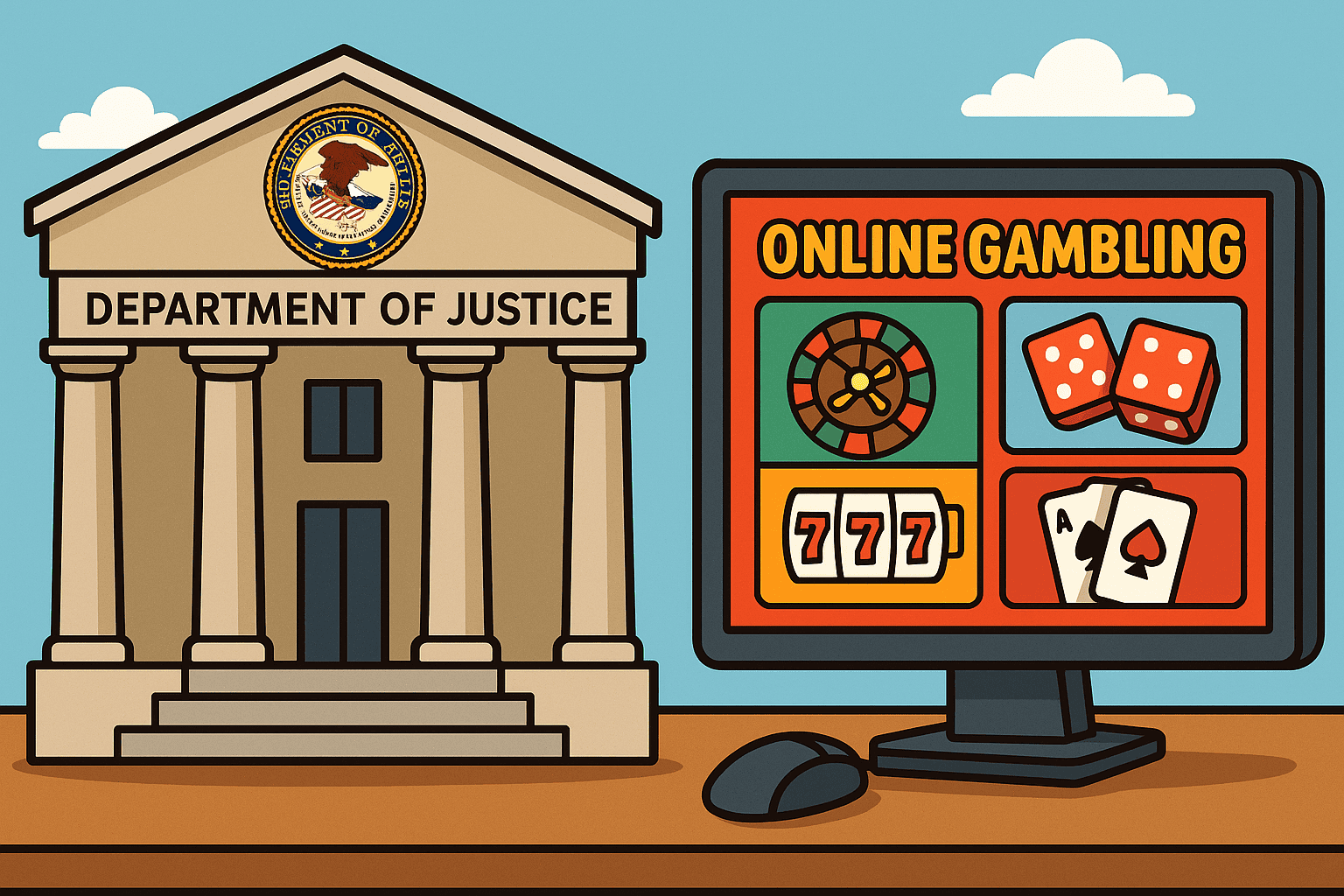
On August 5, 2025, a bipartisan coalition of 50 attorneys general called on the U.S. Department of Justice (DOJ) to seize offshore gambling sites.
The letter urged the DOJ “to take decisive action against the growing threat of illegal offshore gambling operations.”
The attorneys general want the DOJ to “prioritize enforcement efforts” targeting unlawful online sports betting and casino platforms that operate outside the bounds of U.S. law.
Later, in October 2025, a bipartisan group of U.S. Senators also urged the DOJ to act.
What Are Offshore Sportsbooks & Casinos?
Offshore gambling sites are predatory because they usually allow minors to gamble and engage in unethical business practices like delaying a customer’s withdrawal request. They also take bets on events involving minors, like the Little League World Series.
State-regulated platforms also engage in unsavory business practices, but there is some oversight from regulatory bodies. There is no oversight for offshore platforms.
That said, all forms of online gambling are designed to be habit-forming and can cause harm to people.
Read more: Sports Betting Addiction Statistics
Read more: Half Of Sports Betting Revenue Comes From Problem Gamblers
Are Offshore Betting Sites Legal?
Offshore betting sites are not legal in the United States. They are black-market gambling platforms, according to U.S. authorities. Sweepstakes casinos, such as Sportzino and Stake, are one form of these offshore platforms.
They are called “offshore” because their businesses (licensing structures, offices, servers, etc.) are located outside the U.S. and its territories.
These websites operate outside U.S. legal jurisdiction, typically from countries like Curaçao or Costa Rica. They are not licensed by any U.S. state gaming authority.
While many offshore sportsbooks accept American players, they do so in violation of U.S. laws like the Unlawful Internet Gambling Enforcement Act (UIGEA) and the Wire Act.
This means bettors have no legal protection if something goes wrong.
Americans fund their gambling accounts on these platforms through debit/card cards or payment processors like PayPal and Neteller. Some offshore gambling sites accept crypto.
Related: Tennessee Offshore Sports Gambling Fines Reach $600,000
$400-Billion Offshore Gambling Market
According to the letter, casino industry estimates suggest that illegal online gambling may exceed $400 billion in annual volume, resulting in more than $4 billion in lost tax revenue for states.
The American Gaming Association, the U.S. industry’s top lobbying group, is behind the estimate.
The offshore gambling market estimate isn’t without controversy, however. Some industry observers see the estimate as inflated, which can be used to push for more state-regulated online gambling expansion.
Regardless of the figure, offshore gambling platforms cause extraordinary harm to Americans and people globally.
Can someone offering one of these estimates offer, just once, even just part of the method by which they arrived at this number?
UIEGA Could Be Applied Again to Offshore Gambling
In 2011, the U.S. Department of Justice indicted the owners of offshore online poker gambling sites. The online poker industry refers to the event as Black Friday.
The federal government used the 2006 Unlawful Internet Gambling Enforcement Act (UIGEA) to crack down on the websites. The government action booted PokerStars and Full Tilt Poker from American cyberspace.
Fast forward to August 2025, and many states want a similar action against offshore online sportsbooks, casinos and poker platforms.
The coalition of attorneys general urged the DOJ to:
- Pursue injunctive relief under the Unlawful Internet Gambling Enforcement Act to block access to illegal websites and associated payment systems
- Seize assets—including servers, domains and financial proceeds—used in connection with unlawful gaming operations
- Collaborate with state authorities, financial institutions and payment processors to disrupt the financial infrastructure supporting illegal gambling
Illegal Gambling Apps at Risk
Prominent offshore gambling sites such as Stake, Bovada and BetOnline would likely be targets of any federal enforcement.
The feds would likely target gambling platforms operating from the Dutch island of Curaçao. Other offshore gambling hubs include Costa Rica, Panama, Malta and the Philippines.
U.S. customers of these platforms could see their funds stored on the platforms either frozen or lost. Some customers could be repaid, while others would never see their money.
The U.S. government could indict the owners of these platforms, and they could become fugitives like many poker site owners in the wake of 2011’s DOJ enforcement known as Black Friday.
Can the Government Really Do Anything?
Some industry observers don’t think the feds can do much to thwart offshore online gambling.
They say that the offshore industry evolved so another Black Friday doesn’t deal the same blow as it did in 2011.
“Were the AGs advised that offshore sportsbooks over the last 20 years devised a system where they don’t use US banks, processors or TLDs, so there’s not much the DOJ can do?” wrote Joe Brennan Jr., founder of Prime Sportsbook.
Gadoon “Spanky” Kryollos, a sports betting influencer, called the plan to crackdown on offshore gambling sites outdated.
“This plan looks like it was drafted 15 years ago,” he wrote. “It’s comical. The majority of offshore websites have long steered away from using the .com domain to avoid any type of US shutdown. Furthermore, the financial infrastructure and payment systems are way past credit cards, again to avoid US interference.”
Kryollos compared DOJ efforts to “playing a losing game of whack-a-mole.”
Protecting Yourself from Gambling
Gambling Harm recommends ceasing any use of offshore gambling sites. If you know someone who uses them, you should encourage them to stop.
You’re more vulnerable to fraud and addiction when using an offshore gambling platform.
Using a regulated betting platform can be a better option.
However, even regulated betting platforms carry significant addiction risk.
Gambling Harm recommends avoiding online gambling (sports betting, slots, casino, poker, etc.). Gambling is a shallow form of entertainment, and betting platforms are designed to addict.
Discover more from GamblingHarm.org
Subscribe to get the latest posts sent to your email.