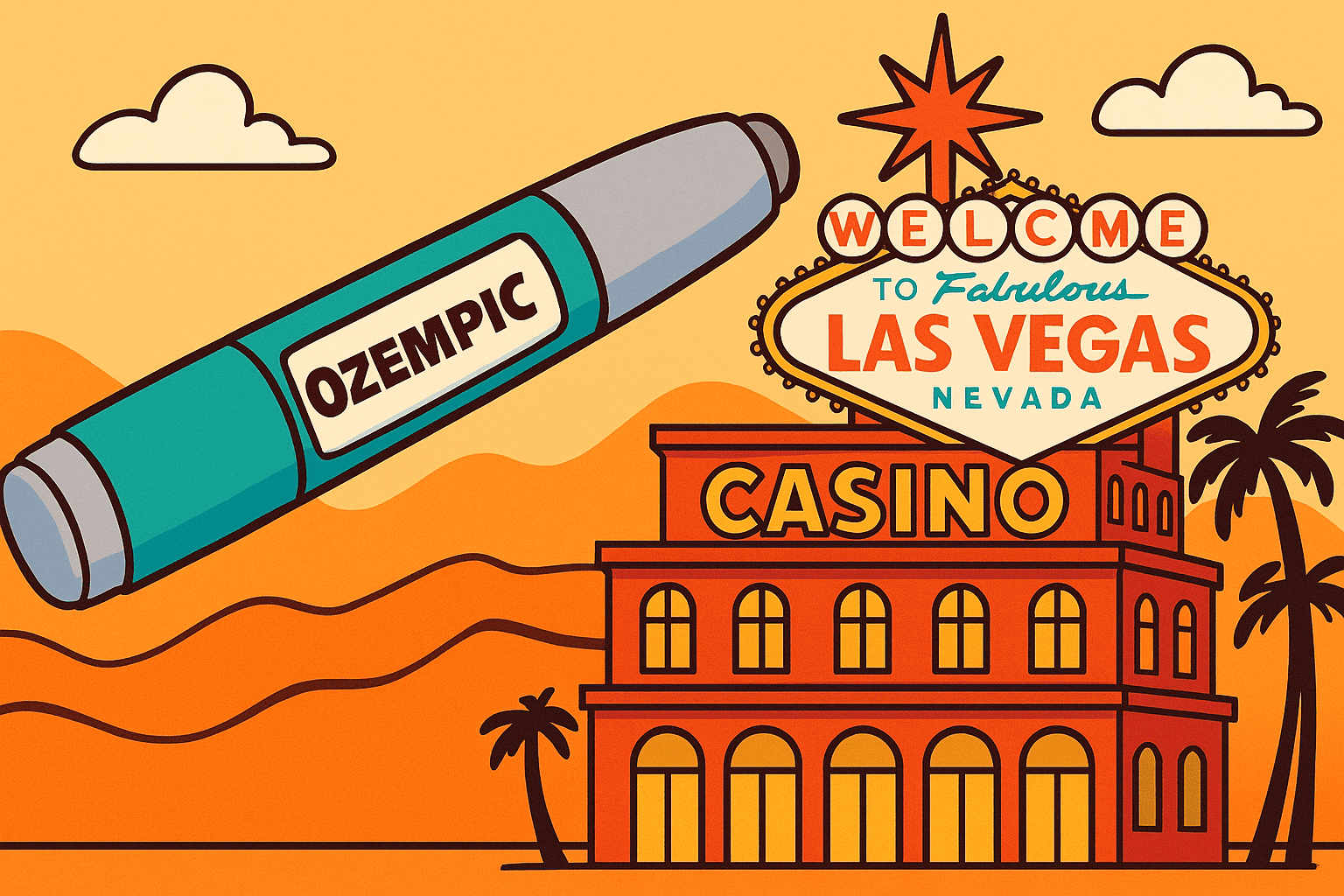
Medications like Ozempic could eventually help with gambling addiction treatment.
However, there is no medically approved use of Ozempic (semaglutide is the active ingredient) to treat gambling addiction. Ozempic is not currently prescribed for gambling disorder.
Medical professionals currently discourage off-label Ozempic use for gambling.
In August 2025, Novo Nordisk, the maker of Ozempic, cut in half the cost of the drug for people without insurance. The move was unrelated to gambling, but it could fuel more off-label use.
Editor’s note: This article is for informational purposes only and is not medical advice.
Ozempic Gambling Treatment: What We Know
Ozempic belongs to a class of drugs known as GLP-1s (the long version is glucagon-like peptide-1 receptor agonists).
Drugmakers developed Ozempic to treat type 2 diabetes; it was later approved for weight management (but off-label use could worsen or trigger eating disorders).
Research shows promise that these drugs could treat various addictions, including gambling.
According to Brown University, they could mark a major advance in addiction treatment.
“GLP-1s aren’t just targeting the brain, like many older medications,” said Carolina Haass-Koffler, associate professor of psychiatry at Brown.
“They work more holistically, helping the brain and the body. We’re not just talking about a promising treatment; we’re looking at a potential turning point in addiction psychiatry and public health.”
How Ozempic Could Treat Gambling
How would Ozempic gambling addiction treatment work? The drug could essentially reduce or suppress cravings to gamble. These cravings can be similar to OCD-linked gambling urges.
There’s anecdotal evidence that, in addition to reducing food urges, Ozempic may provide relief for alcohol, smoking and gambling cravings.
“They bind to specific receptors in the brain, especially in areas tied to the reward system: the ventral tegmental area, nucleus accumbens, prefrontal cortex,” Haass-Koffler explained.
“These regions regulate dopamine and motivation. By targeting these receptors, the drugs blunt dopamine release and reduce reward signaling. That means people feel less driven to seek out food, alcohol or drugs. That’s the crux of how these medications may help.”
What Gamblers Say About Ozempic
You can find individual accounts of Ozempic or similar drugs working for reducing gambling cravings. You should not take anecdotes as proof that the drugs would work for you.
While these stories can offer insight, they are not substitutes for clinical trials or medical guidance.
Here are a few recent social media posts involving Ozempic and gambling:
2025: One gambler in recovery said an Ozempic-like drug called Mounjaro helped them stop gambling for over two years. “This is not a solution by itself, of course, and I’m not saying it’s the only thing that did it, but I’m convinced it helped,” the gambler in recovery said.
2024: One former gambler said Ozempic helped eliminate their urges to play online slots. “This is just anecdotal, but I can say with certainty that it worked for me. To go from playing every day for 5 years to finding it too boring to be worth the effort.”
2024: Another person in a gambling addiction forum on Reddit said they took a GLP-1 drug and it helped—but the side effects were severe. “My problems are gambling and alcohol, and the cravings were for sure less. However, I had big time side effects.”
Reminder: Personal experiences of Ozempic gambling addiction treatment are not substitutes for clinical evidence. Always consult with a healthcare provider.
Ozempic vs. Naltrexone for Gambling Addiction
Naltrexone is another drug frequently mentioned in online discussions about gambling addiction.
Like Ozempic, Naltrexone is not FDA-approved to treat gambling addiction. However, doctors sometimes prescribe Naltrexone in an off-label use for gambling addiction.
Naltrexone, an opioid receptor antagonist, is used off-label to treat gambling addiction by reducing the brain’s reward response to gambling-related stimuli.
It works by blocking opioid receptors, which dampens the dopamine-driven reinforcement that fuels compulsive gambling behavior.
Several clinical trials have shown that Naltrexone can reduce gambling urges and frequency. It is generally well-tolerated but requires liver monitoring during treatment.
You should not use Naltrexone to treat your gambling addiction unless directed by a doctor.
Ozempic Treatment Side Effects
Ozempic may reduce activity in the brain’s dopamine reward system.
While this can help curb cravings and compulsive behavior (like gambling), it may also blunt motivation for other reward-driven activities, such as work, hobbies or socializing.
However, not all users report motivational issues.
Some users report increased mental clarity and improved focus, especially if they struggle with compulsive behaviors.
According to the Cleveland Clinic, other side effects of this class of drugs include nausea, diarrhea, headaches, indigestion and dizziness.
Even after August 2025’s price cut, Ozempic is still expensive, adding to the need for more research on its efficacy for gambling.
Is There Any FDA-Approved Drug for Gambling Addiction?
No. As of 2025, no medication is FDA-approved to treat gambling addiction.
Current treatment options include:
- Cognitive Behavioral Therapy (CBT)
- Motivational Interviewing
- Support groups
- Off-label use of medications like naltrexone, SSRIs and mood stabilizers
If you need immediate help with a gambling problem, call 1-800-GAMBLER.
Ozempic Gambling Addiction Treatment: Talk to Your Doctor
Consult your doctor for more information on Ozempic and gambling addiction.
The worst that can happen is your doctor tells you that they can’t give you Ozempic or similar drugs for your problem gambling.
Drug therapies for gambling addiction could emerge soon.
In the meantime, consider counseling for gambling issues. Medication designed to treat underlying mental health issues, such as depression and anxiety, may help with your addiction.
Recovery from gambling is possible with treatment.
If you are beginning to develop a gambling problem, it’s never too early to quit to protect yourself.
Related: VR Casinos Could Help Treat Gambling Addiction, Study Says
Discover more from GamblingHarm.org
Subscribe to get the latest posts sent to your email.