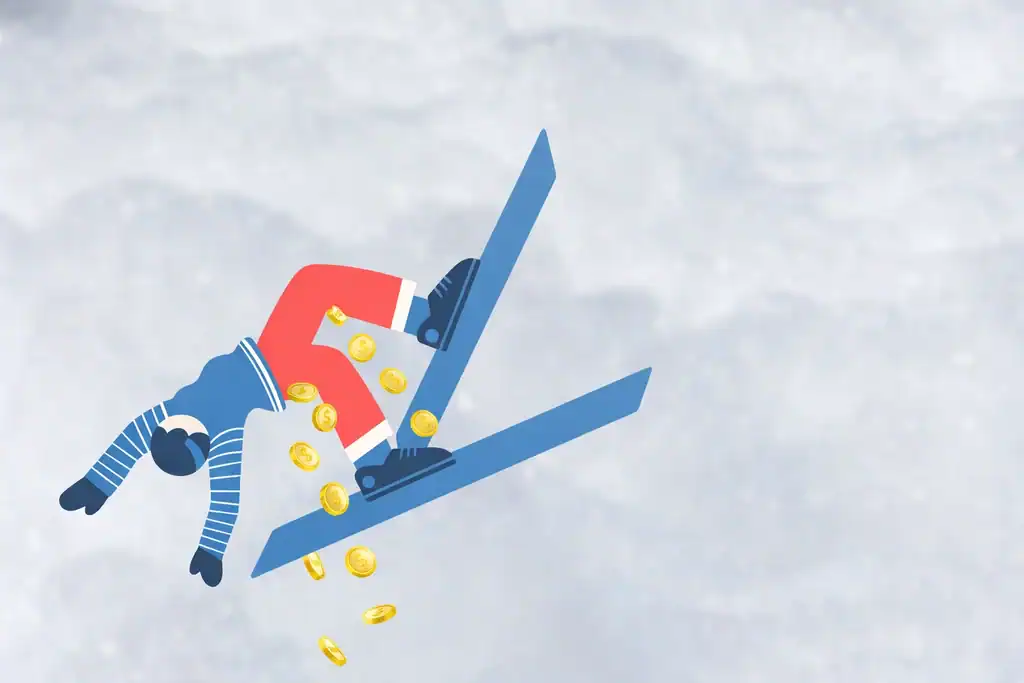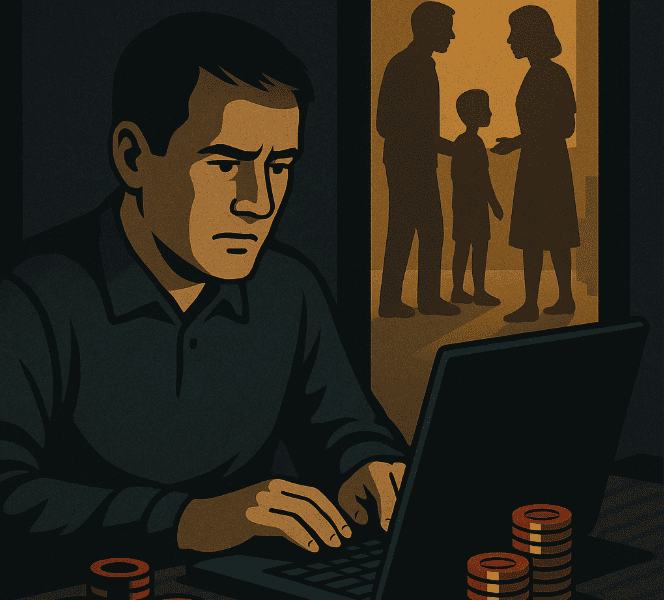
People often call gambling the “hidden addiction” because its warning signs can be easier to miss than those of substance abuse.
Alcoholism or drug addiction, for example, might have clearly visible signs. Meanwhile, a compulsive gambler might appear outwardly fine to many people.
Still, it’s a generalization that gambling addiction has fewer signs in a person’s physical appearance. This doesn’t apply to all people who suffer from problem gambling.
There’s significant overlap with gambling and substance abuse, so a gambling addiction could be hidden behind other addictions that people close to the gambler know about.
Behind the scenes, gambling can wreak havoc.
Physical signs of a gambling addiction, such as worsening anxiety (panic attacks) or depression, can be mistaken for the impact of other adverse life events.
This article provides a comprehensive overview of why gambling is considered a hidden addiction. We’ll touch on these reasons for its hidden nature.
- Fewer physical signs of addiction
- Culture normalization of gambling
- Heightened stigma around gambling problems
- Industry-backed research understates problem gambling prevalence
- Anonymity of online gambling
Understanding Hidden Gambling Addiction
Gambling disorder is officially recognized as an addiction in the DSM-5, making it the only behavioral addiction (non-substance) listed alongside drug and alcohol addictions.
In the United States, gambling addiction is more common than many realize. For example, sports betting addiction statistics show that 30-40% of online sports bettors experience problems.
Researchers estimate that about 5% of the entire U.S. population has a gambling problem.
Gambling-industry backed research usually factors in non-gamblers to get lower problem gambling rates. Meanwhile, more independent research has shown that as many as half of monthly gamblers have issues.
Alarmingly, only about 8% of people with gambling problems seek help for their addiction.
Globally, gambling addiction is also a significant public health concern.
According to the World Health Organization, tens (if not hundreds) of millions of people suffer from gambling disorder. The degree to which the addiction is “hidden” can depend on the country and culture.
Meanwhile, casual gambling is widespread and culturally accepted in many societies.
About 85% of U.S. adults have gambled at least once (60% in the past year), and globally an estimated 26% of the world’s population has gambled in some form.
This normalization can make it harder to distinguish people who can gamble in moderation from those with problems.
Gambling Addiction Stigma
Gambling addiction also remains hidden because of the deep shame attached to it.
There is a perception in society that problem gambling is a moral failing or simply “lack of self-control,” rather than a genuine mental illness.
This stigma can be even worse than that faced by people with substance abuse addictions, leading many gamblers to suffer in silence.
Gambling addiction can have a greater stigma than other addictions because people often see betting a common pastime or harmless entertainment. In fact, the gambling industry often misleadingly refers to its product as “entertainment.”
Unfortunately, secrecy can delay someone from seeking help until their situation becomes desperate. The shame associated with gambling addiction is profound.
Some research suggests that gambling addiction has the highest rate of suicide and suicidal ideation among all forms of addiction.
Online Gambling Anonymity
The advent of online gambling has dramatically increased the accessibility and hidden nature of this addiction.
In the past, a compulsive gambler usually had to visit a casino, racetrack, poker room, etc. in person, where their frequent presence (or absence from home) might tip off others.
Today, anyone with a smartphone or computer can wager 24/7 from the privacy of their home or even on the go, making it easier to conceal a gambling problem.
Over the last decade, there’s been an explosion of internet casinos, poker sites and sports betting apps.
In the U.S., a Supreme Court decision in 2018 allowed states to legalize sports betting, and as of 2025, more than 30 states have sanctioned online betting apps.
The ability to gamble with credit cards or digital payment wallets also fuels hidden betting, since transactions are less tangible than cash losses.
Some states are realizing the problem with credit cards. In April 2025, Illinois became the seventh state to ban the use of credit cards to fund a sports betting account.
Conclusion: Gambling’s Hidden Addiction
Gambling may not leave track marks or a hangover, but it is no less destructive than other addictions. In fact, its very nature – invisible and easy to hide – can allow the problem to grow unchecked until crisis hits.
By shedding light on this so-called “hidden addiction,” we can better recognize the risks and warning signs before it’s too late.
It appears that society is slowly waking up to the reality that gambling disorder is a serious and real condition.
With the rise of online betting, addressing this issue is more urgent than ever.
The good news is that effective help exists, and many people have reclaimed their lives through treatment and support. With the right help, recovery is always possible.
Discover more from GamblingHarm.org
Subscribe to get the latest posts sent to your email.