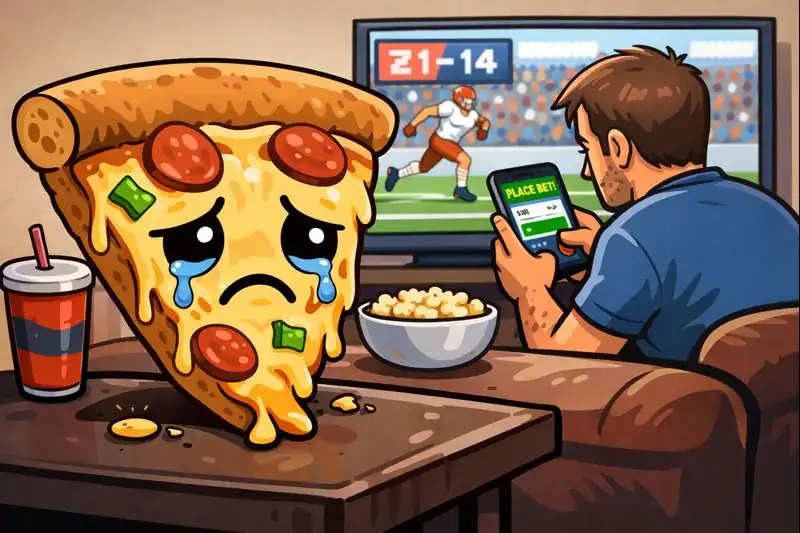
The relationship between gambling and divorce is complex.
Finding specific statistics on how many marriages end specifically due to gambling can be challenging. Divorce causes are often multifaceted and not solely attributed to one issue.
However, it’s widely recognized that gambling problems can put significant strain on relationships, potentially leading to divorce.
Problem gambling can lead to financial instability, trust issues, and emotional distress, all of which contribute to the marriage breakdown.
Unfortunately, the best official data on the role of gambling in U.S. divorces comes from a 1999 report from the National Gambling Impact Study Commission.
The gambling landscape has expanded dramatically over the past 25 years, so the report is outdated.
As of 2025, there are now Las Vegas-style casinos in more than 40 states. Meanwhile, more than 30 states have approved online sports betting since just 2018.
A handful of states have also sanctioned online casinos, making destructive gambling much more convenient. Roughly 10 states now promote lottery gambling via the internet.
Online gambling was in its infancy when the National Gambling Impact Study Commission report was released.
Divorce Rate From Gambling
The National Gambling Impact Study Commission found in a survey that “53.5 percent of identified pathological gamblers reported having been divorced, versus 18.2 percent of non-gamblers and 29.8 percent of low-risk gamblers.”
Even only a couple of the signs of a gambling problem can dramatically raise the likelihood of divorce or separation.
The overall U.S. divorce rate has remained relatively steady since 1999, with roughly 45% of all marriages ending in divorce as of 2024. This divorce rate refers to the lifetime of the marriage.
Among divorced couples, 38% cite financial problems as a reason, according to the National Library of Medicine.
Gambling is a common cause of financial strain, but it is not the only way couples face this hardship. According to Payroll.org, 78% of Americans live paycheck to paycheck.
With the expansion of the gambling industry to more states and mobile devices, we predict that the divorce rate among problem gamblers is higher than it was in 1999.
Americans lose more to gambling than ever before in history.
It’s also worth noting that in the U.K., a country that has sanctioned online gambling since 2005, about 65% of married problem gamblers experience a divorce.
Fortunately, the stigma of gambling addiction has weakened slightly, so a gambling problem caught and addressed in its early stages might now be less likely to end in divorce than it was in 1999. Still, a gambling problem is often called the hidden addiction.
Why Sports Betting Could Be Most Destructive to Marriages
Data suggests that sports betting is the most addictive form of gambling. It’s not the most widespread gambling activity, but it’s especially destructive for people who partake.
According to a recent study in Connecticut, more than half of sports betting industry revenue comes from 2% of the state’s population with the most severe gambling addiction.
The vast majority of industry revenue could come from customers struggling with some level of a sports betting problem if the additional 5% of people classified as “at-risk” are included.
Sports betting is extraordinarily addictive.
One of the most vicious qualities of sports betting is the widely held misconception that it is a skill-based activity. In other words, the belief that sports betting is closer to chess than buying a lotto ticket. That belief is far from reality.
Sports betting does not involve so-called skill. It’s virtually impossible to make a reliable income from gambling on sports. However, many people mistakenly believe they can do it.
High Emotions in Betting
Another unique problem with sports betting is that many people are already emotionally invested in sports teams or players.
Even without risking money on the outcome, millions of people in the U.S. feel anxiety and a sense of loss after a significant sports defeat. There’s also evidence that the rate of heart attacks increases after major sporting events. In extreme cases, gambling addiction can lead to suicide.
According to a 2023 study from the Pew Research Center, men are more than three times as likely to be sports “superfans” than women. It’s widely known that some marriages are strained because of the husband’s obsession with sports.
If there’s gambling on top of that, the likelihood of divorce can skyrocket.
State-sanctioned sports betting is still in its infancy, so more data should be available in the coming years regarding sports betting and its impact on marriages and relationships.
Common Questions About Gambling & Divorce
Now that we’ve covered gambling divorce statistics in the U.S. and elsewhere, let’s look at common questions married people ask when confronted with a gambling problem.
Is gambling a reason to divorce?
Yes, gambling can be a valid reason for divorce, especially when it leads to financial instability, broken trust, or emotional distress. Problem gambling may cause a spouse to lie, drain shared savings, or accumulate debt without the other’s knowledge.
Repeated patterns of deception or refusal to seek help often lead partners to consider legal separation to protect themselves.
Can marriage survive gambling addiction?
Yes, but only with commitment, honesty, and professional support.
Marriage can survive gambling addiction if the person struggling acknowledges the problem and actively seeks help. Ways to address the addiction are counseling, treatment programs, and financial accountability measure.
Partners also need support, whether through therapy or support groups. Recovery is a lengthy (lifelong) process, and both individuals must be willing to rebuild trust, manage finances transparently, and maintain open communication.
Should I leave my husband for gambling?
Leaving your husband because of gambling is a deeply personal decision.
If his gambling is causing serious harm—such as financial ruin, emotional abuse, or repeated lies—you have every right to prioritize your safety and well-being.
If he refuses help or continues gambling despite consequences, separation may be necessary.
However, if he is genuinely seeking treatment and you’re both willing to rebuild trust, couples counseling and individual support can help guide the next steps.
What to do if your spouse is gambling?
Start by educating yourself about problem gambling and how it affects families.
Speak honestly with your spouse about your concerns, and encourage them to seek professional help.
Set firm financial boundaries—such as maintaining separate bank accounts or limiting access to funds. Reach out for support yourself through therapy or local support groups.
You can’t control their behavior, but you can protect your emotional and financial well-being while offering support if they commit to change. Quick action can help reduce the chances of a gambling-related divorce.
Image by Marco Jean deOliveira Teixeira from Pixabay.
Discover more from GamblingHarm.org
Subscribe to get the latest posts sent to your email.