
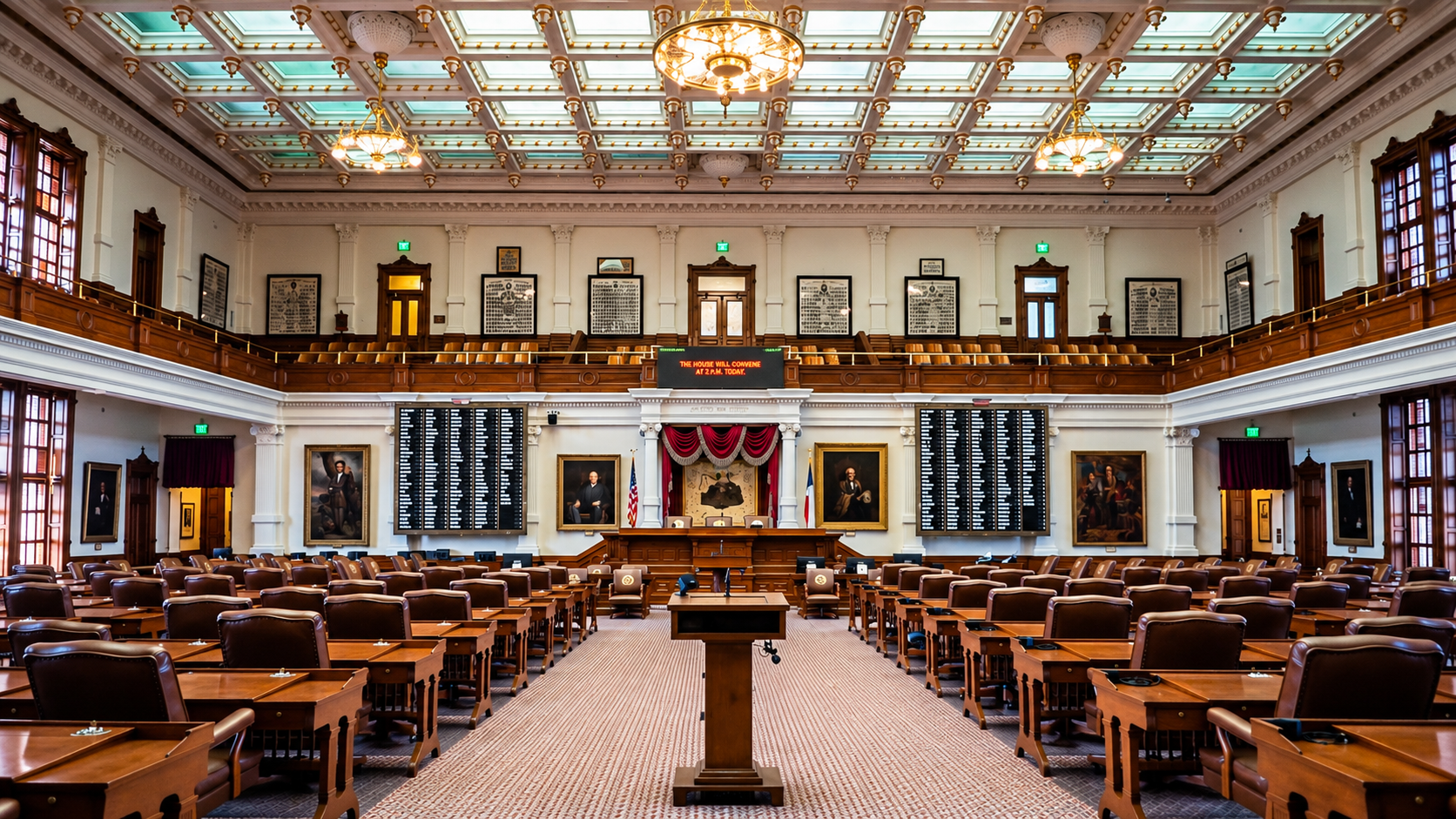
Some Texas lawmakers are again pushing to legalize sports betting and brick-and-mortar casinos, but approval remains uncertain, and the issue remains controversial.
A proposed constitutional amendment would give Texas lawmakers authority to legalize and regulate casino gambling and sports betting, with voters potentially deciding the question in November 2027.
House Joint Resolution 52, introduced by State Rep. Charlie Geren (R-Fort Worth) on Nov. 9, would amend the Texas Constitution to allow the Legislature to authorize casino gaming and sports wagering under state law. Geren filed a nearly identical proposal last year that never advanced beyond a House committee referral.
State Sen. Carol Alvarado (D-Houston) filed Senate Joint Resolution 11 the same day Geren filed his new proposal.
The two resolutions are substantially similar, but Alvarado’s would establish a new state agency to regulate lotteries, casinos, and sports betting.
Proposal Provisions
The proposals call for operator licensing and application fees. They would also limit the state to no more than 10 casinos, with initial license terms of at least 40 years.
Casino-style gambling would be restricted to physical locations, while lawmakers would determine whether sports gambling would be legal online.
The resolution would cap taxes on casino and sports betting revenue at 15%, a relatively low figure compared to other gambling-industry states. It would also prohibit additional state or local taxes and fees specifically targeting those revenues beyond generally applicable business taxes.
Additionally, the measure would establish a process for negotiating tribal-state gaming compacts with Texas’ three federally recognized tribes with Indian lands.
If lawmakers approve it, the constitutional amendment could appear on the Nov. 2, 2027, ballot.
Public Health Costs
Neither resolution establishes specific guardrails over casino or sports betting regarding addiction and the social harm from state-sanctioned gambling.
Those decisions would be left to subsequent legislation.
Some public health experts argue that currently no state has properly regulated online sports betting, which most Americans don’t support.
An Ipsos poll from April 2026 found that more Americans oppose (44%) than support (25%) allowing online or app-based sports betting in their state. Even sports fans oppose it (47% oppose vs. 31% support).
Is There a Path Forward?
Texas saw major political turnover in this month’s elections, raising the stakes for gambling legislation.
Texas elected Democrat Gina Hinojosa to the governorship. Former State Rep. Vikki Goodwin, an Austin Democrat, will be the new lieutenant governor. State Rep. Senfronia Thompson, a Houston Democrat, is positioned to become the next House speaker when lawmakers convene in January.
Over recent years, Democrats have generally been more open to commercial gambling in Texas.
Hinojosa told the Houston Chronicle that she’d veto a casino bill if labor groups aren’t “at the table to negotiate a deal that makes sense for working Texans.” She said that past attempts to legalize gambling haven’t done so, which suggests gambling supporters can win her over.
The key obstacle is the Texas Senate, which Republicans still control, and there’s no indication yet that the upper chamber has warmed up to expanding gambling.
If two-thirds of both legislative chambers approve it, the plan would send a constitutional amendment to voters.
Prediction Markets in Texas
Texas has taken limited action against prediction markets, despite maintaining some of the nation’s strictest gambling prohibitions.
In March 2026, Republican Lt. Gov. Dan Patrick directed the Senate State Affairs Committee to investigate the proliferation of prediction markets, including Kalshi and Polymarket.
The committee held a hearing on Sept. 15, but Texas has not enacted restrictions or initiated enforcement proceedings against prediction markets.
Republican Attorney General Ken Paxton has also passed on joining multistate legal efforts challenging the industry’s claims of exclusive federal oversight. Reports indicate Kalshi and its CEO have given money to Paxton.
Meanwhile, DraftKings and FanDuel offer sports betting via their respective prediction market platforms to Texans, despite the state’s prohibition on conventional online sports betting.
The issue could become a major factor in any legislative effort over state-sanctioned online sports betting.