
Brazil’s long-awaited ban on its dangerous online gambling sector is now in effect, though questions remain about whether it holds.
President Luiz Inácio Lula da Silva signed a measure on Sept. 25 that prohibits operating, offering, intermediating, and advertising bets in Brazil. He made good on his March announcement.
The country’s response was joyous, according to local media reports and widespread reaction on the social media platform X. Brazil established a legal online gambling industry in 2018, but it later wreaked havoc on the country. Other countries have suffered a similar fate with legalizing online gambling.
For a brief U.S. comparison: The U.S. also paved the way for legalized online gambling in 2018 under a controversial Supreme Court ruling. Right now, no formal federal efforts exist to ban state-regulated online gambling, but one proposal would significantly reform it. A few states, most notably Ohio, proposed policies to repeal online gambling laws. Congress has proposed banning federally regulated prediction markets from taking sports bets. A former U.S. Surgeon General said online betting is the “new opioid crisis” in the country, similar to Brazil’s experience.
Public Health
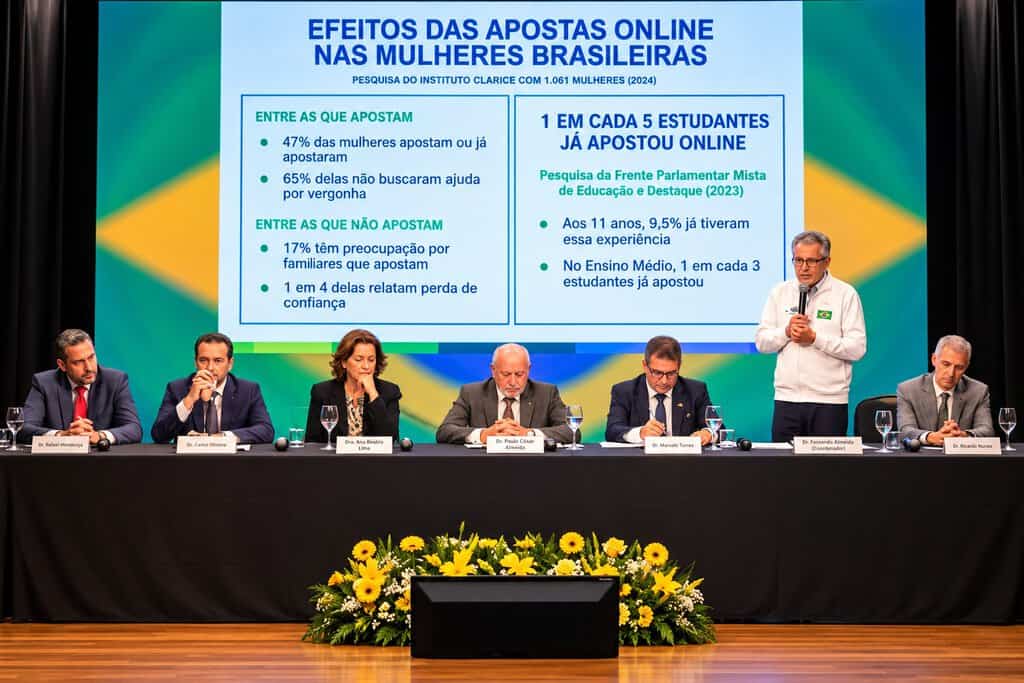
Brazil framed the policy reversal as a public-health and household-finance intervention, citing several concerns.
The Health Ministry said roughly 38% of Brazilians who gamble display risky or problematic gambling patterns. Similar problematic sports betting figures have been observed in the U.S.
Gambling-related treatment through Brazil’s public health system increased roughly 140% between 2018 and 2025.
The ministry also cited research estimating the annual social cost of gambling at R$38.8 billion ($7.43 billion USD based on the current mid-market exchange rate), including R$30.6 billion in health-related costs.
“There is data that expresses the size of the problem, but it certainly cannot translate all the suffering that appears when we hear the accounts of patients, health professionals and family members,” Minister of Health, Alexandre Padilha, said in a statement.
“We are talking about something that goes far beyond an economic activity: it enters people’s homes, schools and cell phones, and affects not only those who develop compulsive behavior, but also the family members around them.”
What the Repeal Covers
The ban covers both online sports betting and casino-style online games, and it applies to federal, state, and federal district authorizations.
Other lottery products authorized under Brazilian law are unaffected.
Lottery products can cause harm, but public health experts consider them significantly less harmful than online sports betting and casino gambling.
Next Steps
Brazil’s measure took effect immediately, although its Congress must approve it within 120 days for it to remain in force.
Lula is up for reelection in early October, which could also affect the measure’s fate.
Licensed operators can no longer accept new deposits. Bettors have until 11:59 p.m. on Oct. 5 to voluntarily withdraw funds, and licensed betting websites and apps are scheduled to be blocked beginning Oct. 6.
Between Oct. 9 and Oct. 14, banks must return remaining player balances, with Caixa Econômica Federal handling cases where ordinary repayment cannot be completed.
Advertising is also being eliminated. Operators cannot enter new advertising or sponsorship agreements, while existing physical advertisements and sponsorship materials must disappear by Oct. 5.
Brazil had issued 85 betting licenses at R$30 million (about $5.7 million USD) each, meaning gambling companies collectively paid about R$2.55 billion (nearly $500 million USD) for authorization. Now, the government says it is canceling those licenses in the public interest and that operators are not entitled to compensation for lost profits, investments, or expectations of continued operation.
Potential Criminal Penalties
Lula’s government also sent legislation to Congress that would create criminal penalties for continuing to operate online gambling.
Under the proposal, operators — including those under a foreign gambling registration or license — could face four to six years in prison. Meanwhile, advertising gambling, recruiting bettors, facilitating gambling payments, or hosting apps used for betting could result in sentences of two to four years.
The government also plans to crack down on offshore operators through website and app blocking, payment restrictions, and coordination among financial, telecommunications, and law-enforcement agencies.