
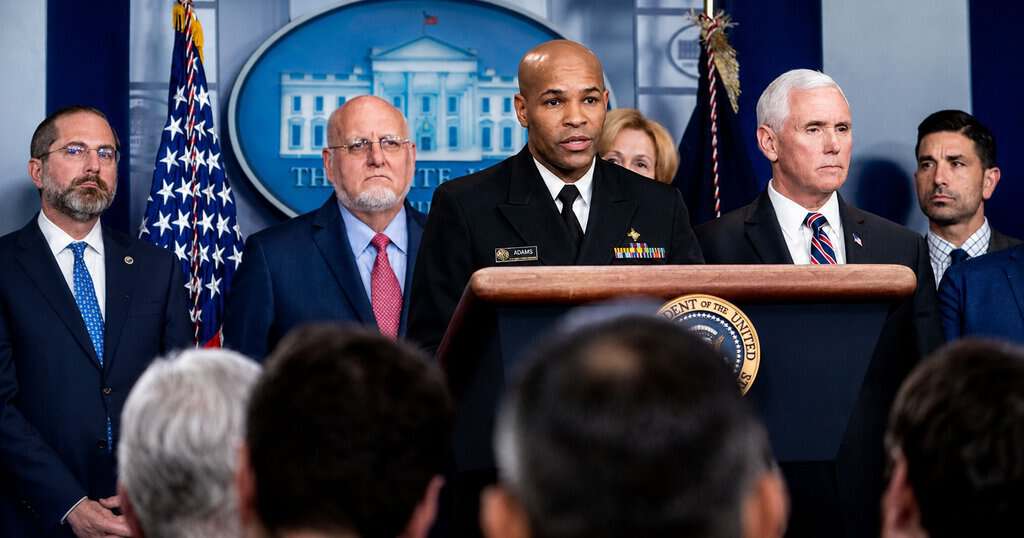
Former U.S. Surgeon General Jerome Adams called sports betting the “new opioid crisis” in a social media post on Aug. 23.
Adams served as the 20th Surgeon General of the United States from 2017 to 2021.
He wrote: “Sports betting is the new opioid crisis. Our kids – especially our boys – are getting exposed and hooked early. And it’s ruining lives as surely as us turning a blind eye to prescription opioids did.”
He added that gambling addiction is “the addiction most likely to lead to suicide.”
Adams was the country’s highest-ranking doctor when the U.S. Supreme Court overturned the Professional and Amateur Sports Protection Act of 1992 (PASPA). The high court ruling allowed all states to legalize sports betting, which is predominantly done through mobile apps.
Adams made his social media comments in response to a graph showing the growth in U.S. sports betting since 2018. The amount wagered, commonly referred to as the handle, on state-sanctioned platforms and at licensed retail locations reached $166.9 billion in 2025, up from roughly $6 billion in 2018.
According to a 2026 Siena Research Institute survey, 60% of online sports bettors chase their losses, the highest percentage in the three-year history of the poll. Chasing losses is a core sign of a gambling problem.
Adams isn’t the first to compare online sports betting to the opioid crisis, and he won’t be the last.
Since 2025, online sports betting has expanded further, driven by prediction markets that facilitate stock-market-style gambling. Under federal law, these platforms offer sports betting in states like California and Texas, where house-banked sports betting is illegal.
The growth of the legal sports betting industry appears to have normalized gambling to the mutual benefit of offshore platforms.
While the online sports betting crisis continues to grow, the U.S. in recent years appears to have made a significant dent in opioid mortality, but not in opioid addiction.
Some sports betting states have passed bills or tweaked regulations to address gambling addiction, but there has been no major overhaul to date. To address offshore operators, some states have issued cease-and-desist orders or filed lawsuits.