
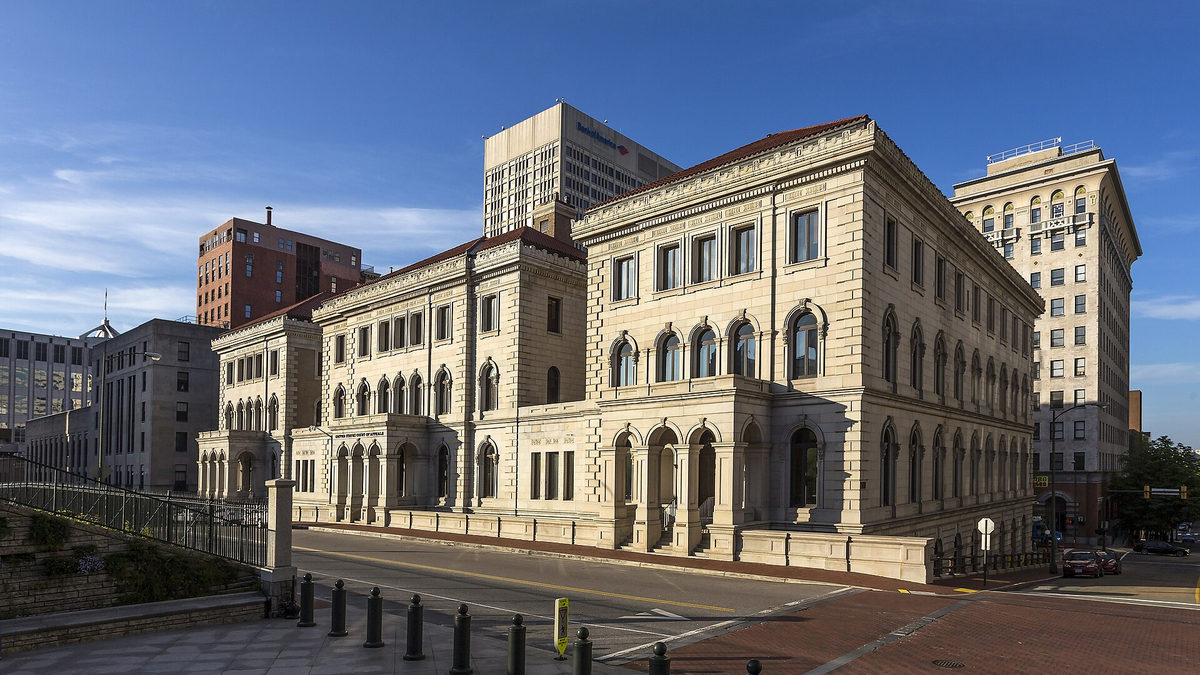
Kalshi, the controversial prediction market, has lost again in federal court. In Virginia, a federal appeals court handed the New York City-based company another significant legal blow.
In a 2–1 decision issued Tuesday, the U.S. Court of Appeals for the Fourth Circuit upheld a lower court’s decision denying Kalshi a preliminary injunction against Maryland.
The ruling means Maryland may enforce its gambling laws against Kalshi. As a result, Maryland can move toward attempting to force Kalshi to geoblock its sports “contracts” within the state, as several other states have done. The Nov. 17 ruling does not itself order Kalshi to implement geoblocking.
The ruling listed amici supporting Maryland, including Stop Predatory Gambling, Texans Against Gambling, Better Markets, and numerous tribal groups that also believe Kalshi’s sports betting infringes on the exclusivity of offering casino-style gambling in numerous markets around the country. The American Gaming Association, the commercial casino industry’s top lobbying group, has also backed Maryland in its legal battle against Kalshi.
Background
The dispute began in April 2025, when Maryland ordered Kalshi to stop offering sports-event contracts, which numerous states have argued amount to illegal gambling. Kalshi continued to offer sports betting in the state despite the order.
Kalshi claims in this lawsuit and many others that its federally regulated prediction markets fall under the exclusive jurisdiction of the Commodity Futures Trading Commission (CFTC). This federal oversight, Kalshi claims, prevents states from regulating its sports betting.
Two judges rejected Kalshi’s arguments, though they reached their conclusions on different legal grounds.
Judge Roger Gregory determined that federal commodities law does not clearly preempt Maryland’s authority to regulate gambling, even assuming Kalshi’s sports contracts qualify as financial “swaps.”
Kalshi claims that it’s a peer-to-peer betting site, not house-banked. But states have argued that Kalshi’s affiliated market-making subsidiary, Kalshi Trading LLC, along with institutional market makers, often takes the opposing side of bets. This allegedly functions like a traditional house-banked sportsbook.
Judge Stephanie Thacker went further than Judge Gregory, arguing that Kalshi’s contracts do not qualify as swaps under federal law.
“What is happening here is sports betting,” Thacker wrote. “That is gambling, plain and simple.”
Implications for Industry
Prediction markets have grown quickly since 2025. Kalshi has emerged as the dominant player over rivals such as Polymarket, Underdog, and Novig. Meanwhile, FanDuel and DraftKings each launched their own prediction markets, but remain small players in prediction-market-style betting.
Bloomberg reported this month that Kalshi is in talks to raise money at a $65 billion valuation, ahead of a potential IPO in 2027. It’s worth more than DraftKings and Flutter, FanDuel’s parent company, combined.
The Fourth Circuit ruling is another major victory for states trying to regulate sports wagering offered through prediction markets. For now, Maryland’s enforcement authority remains intact. Still, the Fourth Circuit’s ruling concerns a preliminary injunction rather than a final judgment on Kalshi.
The ruling follows an August decision by the Ninth Circuit against Kalshi in Nevada. In September, the Sixth Circuit also ruled against Kalshi.
However, the Third Circuit previously sided with Kalshi in its litigation with New Jersey, the state that spearheaded legal efforts roughly a decade ago to expand sports betting outside Nevada.
The conflicting appellate rulings increase the likelihood that the U.S. Supreme Court will take up the legality of sports betting on prediction markets.
What’s at Stake
The U.S. has one of the largest sports gambling markets in the world. Americans lost more than $16 billion to state-sanctioned sports betting platforms in 2025. That figure does not include prediction markets, so-called daily fantasy sports, sweepstakes/“social” sports betting platforms, or offshore gambling sites.
Prediction markets have offered their sports betting to states such as California and Texas, where traditional sports betting remains unauthorized. A federal judge in the former ruled on Nov. 4 to bar Kalshi’s sports betting markets specifically on some tribal lands in the state.
Americans have suffered financial and mental health harm from the explosion of online sports betting options. Former U.S. Surgeon General Jerome Adams recently described it as the “new opioid crisis.” Many other public health experts agree, and advocates are pushing for reform at both the state and federal levels.