
It’s now possible for anyone to get other people banned from legal sports betting apps in Massachussets.
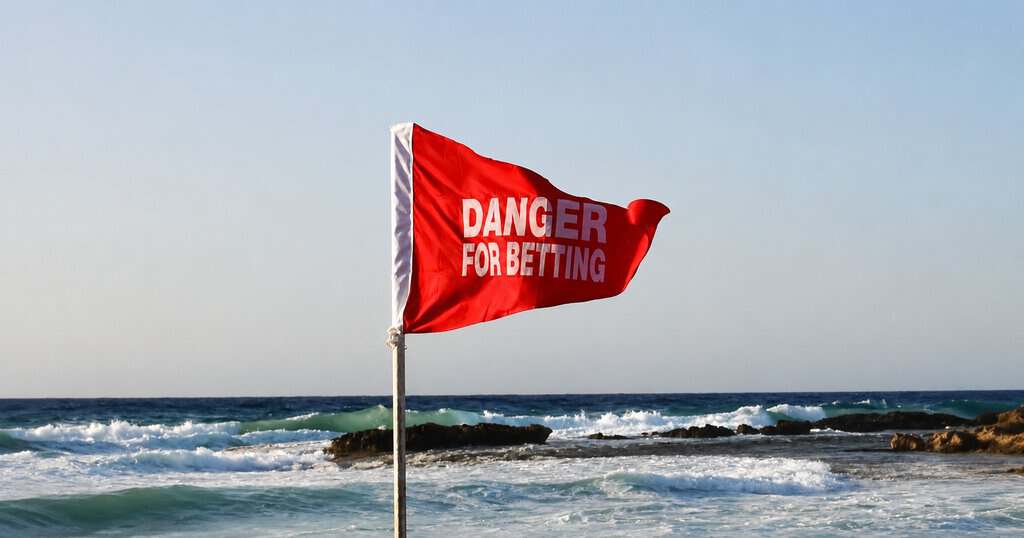
On Monday, Massachusetts announced a limited “red flag” system that allows the public to report threatening or abusive sports bettors and potentially have them banned from the state’s licensed sportsbooks and casinos.
The new system is limited to threats and harassment against athletes, their families, coaches, and officials, behaviors linked to gambling addiction. What is distinctive here is not the state’s power to ban abusive bettors, which other states already have, but the creation of a dedicated public reporting and investigation mechanism.
It’s not a system for intervening and helping residents showing other signs of gambling-related harm, such as catastrophic financial losses or suicidal ideation. Still, it could be used by affected others in some cases.
The Massachusetts Gaming Commission created the online portal for “anyone” to submit summaries of alleged misconduct and supporting documents. Submissions can’t be anonymous, as the state requires a name, phone number, and email address when filing a report.
What Can Get You Banned
Under an MGC gambling regulation, Massachusetts sports bettors can be banned if they did the following or under the following circumstances:
- “willfully and maliciously engaged in a knowing pattern of conduct or series of acts over a period of time directed at a specific person, which seriously alarms that person and would cause a reasonable person to suffer substantial emotional distress”
- “expressed an intent to injure the person or property of another, now or in the future”
- “intended that the threat be conveyed to a particular person”
- “the injury threatened, if carried out, would constitute a crime”
- “the threat was made under circumstances which could reasonably have caused the person to whom it was conveyed to fear that the individual had both the intention and ability to carry it out”
What Happens Next
The MGC’s Investigations and Enforcement Bureau will review reports and evidence submitted and determine whether the incident meets the involuntary exclusion criteria.
The MGC may “take further investigatory action, including using subpoena power to gather additional evidence and/or identify the perpetrator.”
People who are banned will receive a letter in the mail, and they have 30 days to appeal the decision. It’s unclear how long the appeal process will take.
The MGC will give the list to sportsbooks and casinos in the state, and they will be required to refuse service or block account creation for people on the list. Operators who violate this requirement would face regulatory violations, which could result in fines and other enforcement action.
It’s unclear how significant the financial deterrents or other penalties would be for operators.
Legal Force Behind Program
Massachusetts did not pass a new law for the red flag mechanism. The MGC is using authority it already had under the state’s 2022 sports betting law and regulations it adopted afterward.
The 2022 Massachusetts Sports Wagering Act authorizes the MGC to ban individuals from sports betting. In 2023, the MGC adopted a rule allowing exclusion for harassment or threats.
What’s new is the launch of a new enforcement and reporting program.
What About VIPs?
One unanswered question is how the system will work when the alleged harasser is an especially valuable sportsbook customer.
The online sports betting industry derives a disproportionate share of its revenue from high-spending customers, sometimes referred to as VIPs.
Legally, the exclusion standard doesn’t distinguish between a $5 bettor and a $500,000 bettor. Still, industry critics may find it hard to imagine bettors wagering five- or six-figure sums on sporting events being held to the same standards as customers betting small amounts.
Could a high roller have a longer leash to abuse or threaten athletes than others?
Scope of the Problem
A 2025 U.S. News survey found that 21% of sports bettors admit to verbally abusing athletes online or in person. That percentage may underestimate the prevalence because some sports bettors may not want to admit to this behavior.
Massachusetts is not the first state to authorize gambling bans for bettors who harass athletes.
Ohio, West Virginia, Wyoming, and Louisiana have adopted similar measures, although Massachusetts created a dedicated reporting and investigation program for the public.
According to SportsBettingDime.com, as of June 2026, states such as Ohio and West Virginia have not placed any individual on the exclusionary list, citing a lack of official complaints from athletes.
Massachusetts may have better luck with a public reporting portal, but it’s unclear whether it will have an impact. If it works, it could meaningfully reduce harassment. If not, it may be only a band-aid solution to a growing problem.
Stakeholder Support
The MGC said the program has the support of the state’s casinos, professional sports teams, and betting operators.
Notably absent from the initial coalition of support are any professional players’ associations, despite athletes being the people the program is designed to protect and the MGC specifically inviting players’ associations to report harassment.
The NFL, NBA, MLB, and NHL are also not listed as supporters.
The NCAA is the only major sports governing body named in the MGC’s initial list of supporters.
Also notably absent are prediction markets such as Kalshi and Polymarket, as their legality is contested in Massachusetts and beyond. The state does not sanction them.
FanDuel Response
FanDuel Sportsbook, which has stated it has an internal policy banning bettors who harass athletes, made a peculiar statement in response to the “Bet on Respect” program.
“Sports betting is about celebrating the sport and competition,” FanDuel said. “Athletes deserve respect, fans deserve great entertainment.”
It went on to say it’s “proud to support” the MGC’s reporting mechanism.
Sports betting is not about “celebrating” sports. For many users, it’s an attempt to win money. It can be entertainment for others, but it’s unusual to describe it as celebratory.
Bottom Line
Massachusetts is among a growing number of states acting on violent threats and harassment against athletes, their families, officials, coaches, and other staff.
Potentially fueling this behavior is a mounting sports gambling addiction crisis. Former U.S. Surgeon General Jerome Adams recently described sports betting as “the new opioid crisis.”
Until there are meaningful changes to the products themselves, as proposed by the state’s Bettor Health Act, the harmful aspects of sports betting may worsen. Ultimately, the Massachusetts program does not address earlier warning signs of sports gambling addiction.
Bettors banned from Massachusetts-sanctioned sportsbooks and casinos for threats and abuse could turn to prediction markets or offshore platforms, which are not subject to state regulation.