The movement to bring systemic change to online sports gambling is gaining major momentum this month with the launch of a platform for people affected by the gambling of someone they know.
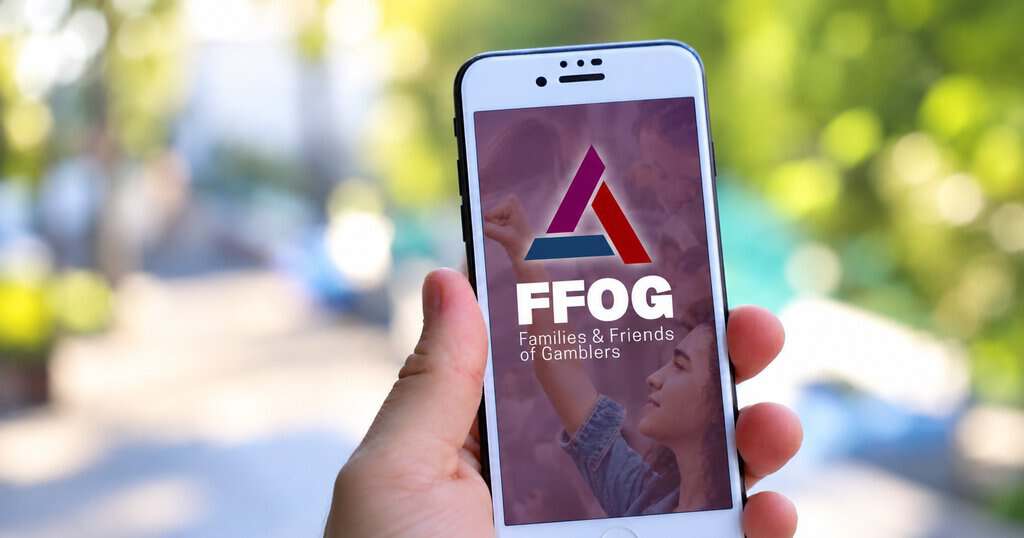
The Truth and Integrity Movement for Gambling Reform, backed by the Boston-based Public Health Advocacy Institute, has launched Families and Friends of Gamblers, a platform to give voice to millions of affected others in the U.S. A kickoff event is scheduled for Sept. 23 in Washington, D.C., and people can begin using the platform now.
People can join through the web platform at HurtByGambling.org or through the organization’s app available for Android and iOS. Through FFOG, users can share their stories, interact, and begin moving past the stigma that has kept the public from hearing about the harm to so many people, said Mark Gottlieb, a co-founder of FFOG.
Platform users can share any part of their stories and experiences anonymously or under their real names. It’s a safe and welcoming space for affected people. The platform has no ties whatsoever with the gambling industry.
“FFOG is the cry from the nation that we’ve had enough,” said Dr. Harry Levant, who also co-founded the platform and the Truth and Integrity Movement for Gambling Reform.
“Harm is spreading not just among people who have already been diagnosed [with gambling addiction], but among countless others suffering, and the eight to 10 family members and friends connected to each person. That’s why FFOG is here. That’s why FFOG will raise its voice collectively and bring about change.”
Scope of the Crisis
Many Americans are now aware of a crisis around online gambling products, particularly sports betting apps and prediction markets. Under the guise of “fan engagement,” sports gambling products on the market today are designed for AI-powered, slot machine-like microbetting, which Levant has long argued is an addictive and dangerous form of betting. He says the industry’s “responsible gambling” framework does not work.
Today, 30 states have sanctioned online sports betting, while the federal government sanctions prediction markets. Levant argues the guardrails to prevent addiction are woefully insufficient.
“We have overwhelming evidence — statistical evidence, anecdotal evidence, daily reports — that we are in the midst of a mental-health and public-health crisis related to gambling addiction,” Levant said.
Levant cited research showing that gambling addiction diagnosis rates are climbing by as much as 60%, but that only represents the tip of the iceberg amid the state-by-state legalization of betting that began eight years ago.
“It doesn’t speak to the countless others suffering who’ve yet to find treatment and, perhaps most importantly, the family members and friends connected to each person who is struggling with gambling,” he said.
In 2013, the Diagnostic and Statistical Manual of Mental Disorders (DSM) reclassified gambling as a behavioral addiction, placing it alongside substance-related disorders.
“We’ve known since 2013 that gambling is an addictive product, just like heroin, opioids, tobacco, alcohol, and cocaine,” Levant said.
In August, former U.S. Surgeon General Jerome Adams described the betting boom as the “new opioid crisis,” which Levant echoed. Public health advocates have also compared the sports betting crisis, particularly the advertising, to the perils of big tobacco a generation ago. Levant said FFOG is also supported by law professor Dick Danyard, famous for his work against the tobacco industry.
The Sports Leagues
The movement, powered by FFOG, also aims to draw organized attention to the harm linked to the sports leagues fully enmeshed in the gambling industry.
“These new and previously unthinkable partnerships between the gambling industry, sports leagues, teams, owners and players, and the technology world and AI have delivered a financial juggernaut fueled by one thing: the amount of money they can get the public to gamble and lose,” Levant said.
This integrity movement is “about returning sports to the American people and not permitting the leagues to weaponize their data and their statistics by fueling faster and faster distribution and consumption of a dangerous product,” he added.
FFOG board member Thomas Powell said the addictive nature of in-game betting has dramatically altered the experience of live sporting events.
“You watch a population within the stadium that has paid a tremendous amount for the seats they’re in, and on almost every play — whether it’s baseball or basketball or whatever — you watch their heads immediately go down and look at their device. It changes the live sporting events as well as what’s on TV. You see it spreading so much that it makes even the live events less pleasurable.”
It appears the major sports leagues don’t care, as long as the money keeps flowing. But exploitation — even predation — violates a core principle people once looked for in the sports they love and trusted: integrity. FFOG’s leaders see that principle as central to the broader movement.
“Integrity means not selling out your fans just to suck them dry with nonstop, high-intensity live betting and parlays,” Gottlieb said. “It means not steering users away from watching sports on TV as we have for generations and instead toward streaming sites that are becoming live sports gambling platforms.”
The co-founders stressed that the movement and FFOG are not about helping the sports leagues protect the integrity of their games, which appears increasingly at risk of match- or spot-fixing. “They’ve already done damage to their integrity. The minute you form these relationships with gambling companies, you call into question the integrity of your product,” Gottlieb added.
“By monetizing every moment of every game, of course you run the risk of compromising the integrity of these games by giving so many opportunities for bad actors to make a quick buck.”
Affected Others Desperate for Help
The relationship many people have with sports has changed with the onslaught of sports betting, according to gambling harms expert and FFOG board member Dr. Deborah Haskins.
“One of my students said, ‘Dr. Haskins, my friends used to watch sports. Now all they do is bet on sports.’ That’s what’s happening. It has shifted from people really enjoying the game and the participation in that experience, and it’s become more about the money — what I can get out of it.”
According to Haskins, the people who are engaged in risky gambling are not typically the ones seeking help. “It’s the family and friends and all the affected others — the community members, the faith communities, the spiritual communities — who are faced with families reaching out for help.”
“When you are working in a clinical realm, we are the ones getting the calls,” she added. “They’re calling for help. They can’t breathe because they don’t understand what’s happening or what’s happened. They had no idea, in many cases, that their loved one or friend was engaging in gambling at this level.”
Like many in the treatment space, Haskins calls for stronger regulation and argues that prevention is crucial. Gottlieb added an analogy: “The idea of putting up the guardrails to prevent the harm rather than throwing a lifesaver into the river when someone screams, ‘I’m drowning,’ is the only responsible [policy] approach.”
Haskins described the FFOG platform as a way to break down the stigma and “silence” around gambling addiction and the ripple effects of financial harm to others.
“We know in most families they don’t want others to know that there’s a gambling problem,” she said. FFOG is a space to “lift the fog,” its founders have said since beginning to develop the platform last year.
Policy Change
FFOG is not a platform built around advocating for specific reform legislation or political candidates, though some people may choose to get involved in advocacy opportunities outside the platform. The community will bring people together to break down walls that have shielded the industry and the leagues from accountability.
Stories from affected others can help denormalize the industry’s behavior, and policy could follow, Gottlieb said.
“Denormalization is what is going to set the stage for meaningful policy change. FFOG is really well positioned to bring those voices into the conversation, increase the rate of this denormalization, and bring us to a place where real meaningful regulation can occur.”
Public opinion polling over the past couple of years has shown a significant shift in American attitudes toward sports betting, legal or otherwise. Consistent with that shift, criticism of the industry is bipartisan and spans the political spectrum.
“FFOG itself is going to be the sort of catalyst that increases the speed of this trend we’ve seen in public opinion consistently in polling over the last few years, where people are sick of the advertising, sick of hearing about bonus bets and parlays all the time, about how wonderful live betting is when they’re just trying to enjoy the game,” Gottlieb said.
Levant added that states can distance themselves from the industry in ways that protect public health. He argues they have a duty to do so
“With every other addictive product, the government acts to slow down the speed, the advertising, the distribution and the consumption of the product. The gambling industry and its sports and media partners are acting with complete impunity, and in many situations state governments have inadvertently become full financial partners.”
An Answer to ‘What Is to Be Done?’
FFOG board member and attorney Brian Quinn of Pennsylvania said he encounters many people who feel powerless against the leagues and gambling companies. In response, FFOG is part of a movement to build collective power.
“I speak to groups all over the country, and I hear a lot of this: ‘I really can’t stand what I see and what’s going on. I don’t know what we can do about it.’ The overwhelming attitude is, ‘I don’t like any of this,’ but then there’s a shrug: ‘What can be done?’”
The growing momentum to reform the online sports betting industry is still in its early innings. Other broader movement leaders include Stop Predatory Gambling, which is unaffiliated with FFOG but shares many of its goals. From here, the FFOG platform is ready to elevate and sharpen the simmering public demand for systemic change.
The FFOG launch press release cited American historical figures such as Frederick Douglass and Abraham Lincoln. While the Truth and Integrity Movement for Gambling Reform isn’t about abolishing online sports betting, a larger freedom issue seems to be at play.
“The analogies to freedom that date back to the Emancipation Proclamation and the Civil War resonate with folks who feel like addiction is an attack on freedom,” Gottlieb said.
The platform’s community for affected others will grow and adapt as the fight evolves, its founders said. “What the movement is going to evolve into is the real beauty of FFOG,” Levant said.